Welcome! Highly unscientific polling has revealed an interest in a regular or semi-regular feature focused on homeschooling.
Note that I am NOT some homeschooling guru with years of experience. We are just beginning, so I want some other people to discuss things with. I don’t have a curriculum picked out nor a coherent “philosophy,” but I am SO EXCITED about all of the things I have to teach I couldn’t even list them all.
I was thinking of starting with just a focus on what has been successful this week–which books/websites/projects we liked–and perhaps what was unsuccessful. I invite all of you to come and share your thoughts, ideas, questions, philosophies, recommendations, etc. Parents whose kids are attending regular schools but want to talk about learning materials are also welcome.
One request: Please no knee-jerk bashing of public schools or teachers. (I just find this really annoying.) Thoughtful, well-reasoned critique of mainstream schooling are fine, but let’s try to focus on the homeschooling.
Like many parents, I thought it’d be useful to learn some basic coding, but have no idea where to start. I once read HTML for dummies, but I don’t know my CSS from Perl, much less what’s best for kids.
After a bit of searching, I decided to try the the DK Coding with Scratch series. (This particular workbook is aimed at kids 6-9 yrs old, but there are others in the series.)
Scratch is a free, simple, child-friendly coding program available online at https://scratch.mit.edu/. You don’t need the workbook to use Scratch, (it’s just a helpful supplement.) There are also lots of helpful Youtube videos for the enterprising young coder.
Note: my kids really want to code because they want to make their own video games.
In general, I have found that toys and games that claim they will teach your kids to code actually won’t. (Eg, Robot Turtles.) Some of these games are a ton of fun anyway, I just wouldn’t expect to become a great coder that way.
Professor Astro Cat’s Frontiers of Space is as good as it looks. Target market is 8-11 years old. There’s a lot of information per page, so we’re reading and discussing a few pages each day.
I’m still trying to figure out how to do hands-on science activities without spending a bundle. Most of the “little labs” type science kits look fun, but don’t pack a lot of educational bang for your buck. For example, today we built a compass (it cost $10 at the toy store, not the $205 someone is trying charge on Amazon.) This was fun and I really like the little model, but it also took about 5 minutes to snap the pieces together and we can’t actually carry it around to use it like a real compass.
Plus, most of these labs are basically single-use items. I like toys with a sciency-theme, but they’re too expensive to run the whole science curriculum off of.
Oh, sure, I hand them a page of math problems and they start squawking at me like chickens. But bedtime rolls around and they’re like, “Where’s our Bedtime Math? Can’t we do one more page? One more problem? Please?”
There are only three math problems every other page (though this does add up to over 100 problems,) the presentation is fun, and the kids like the book better than going to sleep.
The book offers easy, medium, and hard problems in each section, so it works for kids between the ages of about 4 and 10.
There’s an inherent tension in education between emphasizing subjects that kids are already good at and working on the ones they’re bad at. The former gives kids a chance to excel, build confidence, and of course actually get good at something, while the latter is often an annoying pain in the butt but nevertheless necessary.
Since we’ve just started and are still getting in the swing of things, I’m trying to focus primarily on the things they’re good at and enjoy and have just a little daily focus on the things they’re weak at.
I’d like to find a good typing tutor (I’ll probably be trying several out soon) because watching the kids hunt-and-peck at the keyboard makes my hair stand on end. I’d also like to find a good way to hold up workbooks next to the computer to make using the DK books easier.
That’s about it, so I’ll open the floor to you guys.
No knows exactly where Jean Lafitte was born–The Pirate’s Own Book claims St. Malo, a (formerly) notorious pirate’s haunt in Brittany, France. Wikipedia proposes the Basque region of France or the French colony of St. Domingue (now Haiti,) among others:
Lafitte claimed to have been born in Bordeaux, France, in 1780 from SephardicJewish parents whose Conversos grandmother and mother fled Spain for France in 1765, after his maternal grandfather was put to death by the Inquisition for “Judaizing”. He and his brother Pierre alternately claimed to have been born in Bayonne, while other documents of the time place his birthplace as St. Malo or Brest. … Other contemporary accounts claim that Lafitte was born in Orduna, Spain or in Westchester, New York.[2]
With few hard facts, Wikipedia skips Lafitte’s early life almost completely. TPOB, thankfully, provides a stirring (if possibly untrue) account:
…after a cruise during which [Lafitte] robbed the vessels of other nations, besides those of England, and thus committing piracy, he stopped at the Seychelles, and took in a load of slaves for the Mauritius; but being chased by an English frigate as far north as the equator, he found himself in a very awkward condition; not having provisions enough on board his ship to carry him back to the French Colony.
He therefore conceived the bold project of proceeding to the Bay of Bengal, in order to get provisions from on board some English ships. In his ship of two hundred tons, with only two guns and twenty-six men, he attacked and took an English armed schooner with a numerous crew. After putting nineteen of his own crew on board the schooner, he took the command of her and proceeded to cruise upon the coast of Bengal.
He there fell in with the Pagoda, a vessel belonging to the English East India Company, armed with twenty-six twelve pounders and manned with one hundred and fifty men. Expecting that the enemy would take him for a pilot of the Ganges, he manoeuvred accordingly. The Pagoda manifested no suspicions, whereupon he suddenly darted with his brave followers upon her decks, overturned all who opposed them, and speedily took the ship.
After a very successful cruise he arrived safe at the Mauritius, and took the command of La Confiance of twenty-six guns and two hundred and fifty men, and sailed for the coast of British India.
Off the Sand Heads in October, 1807, Lafitte fell in with the Queen East Indiaman, with a crew of near four hundred men, and carrying forty guns; he conceived the bold project of getting possession of her. Never was there beheld a more unequal conflict; even the height of the vessel compared to the feeble privateer augmented the chances against Lafitte; but the difficulty and danger far from discouraging this intrepid sailor, acted as an additional spur to his brilliant valor. After electrifying his crew with a few words of hope and ardor, he manoeuvred and ran on board of the enemy. In this position he received a broadside when close too; but he expected this, and made his men lay flat upon the deck. After the first fire they all rose, and from the yards and tops, threw bombs and grenades into the forecastle of the Indiaman. This sudden and unforeseen attack caused a great havoc. In an instant, death and terror made them abandon a part of the vessel near the mizen-mast.
Lafitte, who observed every thing, seized the decisive moment, beat to arms, and forty of his crew prepared to board, with pistols in their hands and daggers held between their teeth. As soon as they got on deck, they rushed upon the affrighted crowd, who retreated to the steerage, and endeavored to defend themselves there. Lafitte thereupon ordered a second division to board, which he headed himself; the captain of the Indiaman was killed, and all were swept away in a moment. Lafitte caused a gun to be loaded with grape, which he pointed towards the place where the crowd was assembled, threatening to exterminate them. The English deeming resistance fruitless, surrendered, and Lafitte hastened to put a stop to the slaughter. This exploit, hitherto unparalleled, resounded through India, and the name of Lafitte became the terror of English commerce in these latitudes.
Wikipedia speculates far humbler origins: he grew up aboard ships owned by his father, a trader. They were living in or near St. Domingue when the Haitian revolution broke out, and fled to Louisiana.
At this point TPOB and Wikipedia are in agreement: Lafitte moved to Barataria, Louisiana, around the time of the Louisiana purchase. Here he found a much safer way to earn a living than charging ships: smuggling.
In 1807, the US government passed an embargo against trade with Britain and France:
The embargo was imposed in response to violations of the United States neutrality, in which American merchantmen and their cargo were seized as contraband of war by the belligerent European navies. The British Royal Navy, in particular, resorted to impressment, forcing thousands of American seamen into service on their warships. Britain and France, engaged in the Napoleonic Wars, rationalized the plunder of U.S. shipping as incidental to war and necessary for their survival. Americans saw the Chesapeake-Leopard Affair as a particularly egregious example of a British violation of American neutrality.
A pirate is an outlaw who plunders ships on the high seas, but a privateer, like Sir Francis Drake, is a man who has been given permission by his sovereign to rape and despoil the ships of other nations.
The embargo was particularly problematic for Louisiana, which was accustomed to trading with the other French colonies of the Caribbean, so Lafitte and his brother, Piere, established a smuggling port in Barataria. By 1810, business was booming, and since almost everyone in Louisiana benefited from the trade Lafitte and his men enabled, the local government turned a mostly blind eye to his activities.
In 1812, Lafitte returned to piracy with the purchase of a schooner, and soon after captured a Spanish hermaphrodite brig, which Wikipedia assures me is a kind of boat.
Sale of the brig’s cargo–including 77 slaves–netted $18,000 in profits plus a new ship, which Lafitte re-christianed the Dorada. With the Dorada, Lafitte captured a third ship laden with over $9,000 in goods, but decided the ship itself was not particularly useful for piracy, and so turned it back over it to its captain. His habit of not massacring everyone onboard the ships he captured and sometimes returning them to their rightful owners earned Lafitte some measure of local good will.
Lafitte soon captured two more ships, La Diligent and the Petit Milan, which they outfitted with guns from their original schooner. Biographer William Davis writes that this was likely one of the largest and most versatile privately owned corsair fleets operating on the coast.
The Lafittes made good use of their ships in the smuggling business. According to Wikipedia:
For several months, the Lafittes would send the ships directly to New Orleans with a legal cargo and would take on outgoing provisions in the city. The crew would create a manifest that listed not the provisions that had been purchased, but smuggled items stored at Barataria. Uninterested in exports from New Orleans, customs agents rarely checked the accuracy of the manifests. The ship would sail to the mouth of Bayou Lafourche, load the contraband goods, and sail “legally” back to New Orleans, with goods listed on a certified manifest.[22]
With the outbreak of war in 1812, the US government issued Letters of Marque–official documents authorizing private citizens to become privateers–to several of Lafitte’s men.
Article 1, Section 8, line 11 of the US Constitution states that Congress shall have the power to “To declare War, grant Letters of Marque and Reprisal, and make Rules concerning Captures on Land and Water.” (Letters of Marque are interesting in and of themselves, but would require too long a diversion to discuss fully right now.)
Lafitte’s men soon had Letters of Marque from several different countries–including ones Lafitte made up. Goods from captured British ships they turned in to the authorities in New Orleans, but goods from other ships they captured went through Barataria, depriving the government of tax revenue.
Since the stationary bandits weren’t strong enough to stop the mobile ones, the government resorted to suing Lafitte for tax evasion. There followed several skirmishes between Lafitte and the revenuers:
On November 10, 1812, the United States District Attorney John R. Grymes charged Lafitte with “violation of the revenue law”.[27] Three days later, 40 soldiers were sent to ambush the Baratarians; they captured Lafitte, his brother Pierre, and 25 unarmed smugglers on November 16, and confiscated several thousand dollars of contraband. Officials released the smugglers after they posted bond, and they disappeared, refusing to return for a trial.[27] …
In October, a revenue officer prepared an ambush of a band of Lafitte’s smugglers. The smugglers wounded one of the officers and safely escaped with the contraband.[31] The following month, the governor offered a $500 reward for Lafitte’s capture. Within two days of his offer, handbills were posted all over New Orleans offering a similar award for the arrest of the governor. …
Given the success of his auctions at the Temple, in January 1814 Lafitte set up a similar auction at a site just outside New Orleans. Officials tried to break up this auction by force, and in the ensuing gunfight, one of the revenue officers was killed and two others were wounded.[33]
The government’s ability to apprehend Lafitte was hampered by the fact that Louisianans appreciated the lower prices they could get buying smuggled goods directly from Barataria rather than official import channels. They did, however, catch, convict, and imprison his brother, Pierre.
In 1814, a British warship arrived in Barataria, bearing an intriguing offer:
The British raised a white flag and launched a small dinghy with several officers. Lafitte and several of his men rowed to meet them halfway.[37]
Captain Nicholas Lockyer, the commander of the Sophie, had been ordered to contact the “Commandant at Barataria”. He was accompanied by a Royal Marine infantry Captain, John McWilliam,[38][39] who had been given a package to deliver to Lafitte. The Baratarians invited the British officers to row to their island. When they had disembarked and were surrounded by his men, Lafitte identified himself to them. Many of the smugglers wanted to lynch the British men, but Lafitte intervened and placed guards outside his home to ensure their protection.[37] McWilliam brought two letters in his packet for Lafitte: one, under the seal of King George III, offered Lafitte and his forces British citizenship and land grants in the British colonies in the Americas if they promised to assist in the naval fight against the United States and to return any recent property that had been taken from Spanish ships. (The British were allied with Spain against the French and the US.) If they refused the offer, the British Navy would destroy Barataria. The second item was a personal note to Lafitte from McWilliam’s superior, Lieutenant Colonel Edward Nicolls, urging him to accept the offer.[40]
TPOB claims that Lafitte turned down the offer due to patriotic sentiments, while Wikipedia gives a more self-interested motivation: he thought the Americans would win and did not wish to be on the side of the losers. Moreover, an American victory left him only the revenuers to contend with, while a British victory could bring his operations into conflict with the British navy–and he considered the revenuers easier opponents.
Lafitte therefore offered his services to the Americans in exchange for a pardon. His brother–perhaps coincidentally–mysteriously “escaped” from prison soon after.
Within days, however, the US navy attacked Barataria, capturing 8 ships, 20 canon, $500,000 worth of goods, and 80 men–but not Lafitte. Louisiana’s Governor Claiborne wrote to the Attorney General and General Andrew Jackson to request a pardon for Lafitte and his men, arguing that for generations, smugglers were “esteemed honest … [and] sympathy for these offenders is certainly more or less felt by many of the Louisianans,” and that Patterson’s capture of Lafitte’s ships, “had destroyed a potential first line of defense for Louisiana.”
Jackson responded testily, “I ask you, Louisianans, can we place any confidence in the honor of men who have courted an alliance with pirates and robbers?” But when Jackson arrived in New Orleans, he found the city woefully unprepared to defend against the invading British. It had only two ships, plus the eight captured from Lafitte–and not enough sailors to man them all. General Jackson had no choice: he pardoned the pirates. TPOB quotes Lafitte’s official pardon from President Madison:
It has therefore been seen, with great satisfaction, that the General Assembly of the State of Louisiana earnestly recommend those offenders to the benefit of a full pardon; And in compliance with that recommendation, as well as in consideration of all the other extraordinary circumstances in the case, I, James Madison, President of the United States of America, do issue this proclamation, hereby granting, publishing and declaring, a free and full pardon of all offences committed in violation of any act or acts of the Congress of the said United States, touching the revenue, trade and navigation thereof, or touching the intercourse and commerce of the United States with foreign nations, at any time before the eighth day of January, in the present year one thousand eight hundred and fifteen, by any person or persons whatsoever, being inhabitants of New Orleans and the adjacent country, or being inhabitants of the said island of Barrataria, and the places adjacent; Provided, that every person, claiming the benefit of this full pardon, in order to entitle himself thereto, shall produce a certificate in writing from the governor of the State of Louisiana, stating that such person has aided in the defence of New Orleans and the adjacent country, during the invasion thereof as aforesaid.
TPOB also provides a stirring description of the Battle of New Orleans:
The morning of the eighth of January, was ushered in with the discharge of rockets, the sound of cannon, and the cheers of the British soldiers advancing to the attack. … A storm of rockets preceded them, and an incessant fire opened from the battery, which commanded the advanced column. The musketry and rifles from the Kentuckians and Tennesseans, joined the fire of the artillery, and in a few moments was heard along the line a ceaseless, rolling fire, whose tremendous noise resembled the continued reverberation of thunder. One of these guns, a twenty-four pounder, placed upon the breastwork in the third embrasure from the river, drew, from the fatal skill and activity with which it was managed, even in the heat of battle, the admiration of both Americans and British; and became one of the points most dreaded by the advancing foe.
Here was stationed Lafitte and his lieutenant Dominique and a large band of his men, who during the continuance of the battle, fought with unparalleled bravery. The British already had been twice driven back in the utmost confusion, with the loss of their commander-in-chief, and two general officers.
Two other batteries were manned by the Barratarians, who served their pieces with the steadiness and precision of veteran gunners. In the first attack of the enemy, a column pushed forward between the levee and river; and so precipitate was their charge that the outposts were forced to retire, closely pressed by the enemy. Before the batteries could meet the charge, clearing the ditch, they gained the redoubt through the embrasures, leaping over the parapet, and overwhelming by their superior force the small party stationed there.
Lafitte, who was commanding in conjunction with his officers, at one of the guns, no sooner saw the bold movement of the enemy, than calling a few of his best men by his side, he sprung forward to the point of danger, and clearing the breastwork of the entrenchments, leaped, cutlass in hand, into the midst of the enemy, followed by a score of his men, who in many a hard fought battle upon his own deck, had been well tried.
Astonished at the intrepidity which could lead men to leave their entrenchments and meet them hand to hand, and pressed by the suddenness of the charge, which was made with the recklessness, skill and rapidity of practised boarders bounding upon the deck of an enemy’s vessel, they began to give way, while one after another, two British officers fell before the cutlass of the pirate, as they were bravely encouraging their men. All the energies of the British were now concentrated to scale the breastwork, which one daring officer had already mounted. While Lafitte and his followers, seconding a gallant band of volunteer riflemen, formed a phalanx which they in vain assayed to penetrate.
The British finding it impossible to take the city and the havoc in their ranks being dreadful, made a precipitate retreat, leaving the field covered with their dead and wounded.
General Jackson, in his correspondence with the secretary of war did not fail to notice the conduct of the “Corsairs of Barrataria,” who were, as we have already seen, employed in the artillery service.
With the war’s conclusion, Lafitte seems to have felt like he had garnered too much attention from official government officials and left Louisiana for Galveston, Texas, then part of the Spanish Empire. Spain at the time was embroiled in the Mexican Revolution, and Lafitte offered Spain his services as a spy, particularly against Louis-Michel Aury, a French privateer on the Mexican side. He ousted Aury and took over the island, establishing a second smuggling base. (Today, Galveston is close to the port of Houston, the fourth largest city in the country.)
Lafitte’s “pirate colony” grew quickly, to 100-200 people and a few women; during this time he married and had his only known legal child, who died around the age of 12. (Wikipedia also mentions a child with a mistress, though not what became of it.)
In 1818, the US government passed a new law restricting the import of slaves, but this law had a poorly-thought-out loophole: pirates could capture slave ships, turn the cargo over to customs officials, and the receive 50% of the profits from sale of the cargo. Smugglers, pirates, and the operators of slave ships soon worked out a way around the law: smugglers bought the slaves from the ships, brought them to Louisiana, and turned them in to the government, receiving half their sale value. A second smuggler then bought the slaves at auction and could legally re-sell them throughout the South.
In other words, banning importation without banning sales just encouraged people to work around the importation law. Interestingly, slavery and piracy became so closely connected that in 1820, the Act to Protect the Commerce of the United States and Punish the Crime of Piracy was amended to also include the slave trade as a form of piracy.
Unfortunately for Lafitte, the tide was turning against him. A hurricane hit Galveston in 1818, destroying most of the colony’s houses. After the American Navy drove him from Galveston, he relocated to Cuba, but eventually angered the Cubans, too. They outlawed all forms of privateering, and Lafitte moved to Columbia. Here the government commissioned him as an official privateer, authorized to capture Spanish ships.
With increased official naval presences in the Gulf and Caribbean, Lafitte’s business became more dangerous and less profitable. His ships were captured and men arrested and executed. TPOB provides a description of the end of Barataria, after Lafitte’s departure:
About this time one Mitchell, who had formerly belonged to Lafitte’s gang, collected upwards of one hundred and fifty desperadoes and fortified himself on an island near Barrataria, with several pieces of cannon; and swore that he and all his comrades would perish within their trenches before they would surrender to any man. …
The United States cutter, Alabama, on her way to the station off the mouth of the Mississippi, captured a piratical schooner belonging to Lafitte … An expedition was now sent to dislodge Mitchell and his comrades from the island he had taken possession of; after coming to anchor, a summons was sent for him to surrender, which was answered by a brisk cannonade from his breastwork. The vessels were warped close in shore; and the boats manned and sent on shore whilst the vessels opened upon the pirates; the boat’s crews landed under a galling fire of grape shot and formed in the most undaunted manner; and although a severe loss was sustained they entered the breastwork at the point of the bayonet; after a desperate fight the pirates gave way, many were taken prisoners but Mitchell and the greatest part escaped to the cypress swamps where it was impossible to arrest them.
A large quantity of dry goods and specie together with other booty was taken. Twenty of the pirates were taken and brought to New Orleans, and tried before Judge Hall, of the Circuit Court of the United States, sixteen were brought in guilty; and after the Judge had finished pronouncing sentence of death upon the hardened wretches, several of them cried out in open court, Murder–by God.
Accounts of these transactions having reached Lafitte, he plainly perceived there was a determination to sweep all his cruisers from the sea; and a war of extermination appeared to be waged against him.
No one is sure exactly when or how Lafitte died. Wikipedia claims he was cruising for Spanish silver off the coast of Honduras when a Spanish ship counterattacked. Injured in the ensuing battle, Laftitte died on February 5th, 1823.
TPOB credits his death to the British:
In a fit of desperation [Lafitte] procured a large and fast sailing brigantine mounting sixteen guns and having selected a crew of one hundred and sixty men he started without any commission as a regular pirate determined to rob all nations and neither to give or receive quarter.
A British sloop of war which was cruising in the Gulf of Mexico, having heard that Lafitte himself was at sea, kept a sharp look out from the mast head; when one morning as an officer was sweeping the horizon with his glass he discovered a long dark looking vessel, low in the water, but having very tall masts, with sails white as the driven snow. As the sloop of war had the weather gage of the pirate and could outsail her before the wind, she set her studding sails and crowded every inch of canvass in chase; as soon as Lafitte ascertained the character of his opponent, he ordered the awnings to be furled and set his big square-sail and shot rapidly through the water; but as the breeze freshened the sloop of war came up rapidly with the pirate, who, finding no chance of escaping, determined to sell his life as dearly as possible; the guns were cast loose and the shot handed up; and a fire opened upon the ship which killed a number of men and carried away her foretopmast, but she reserved her fire until within cable’s distance of the pirate; when she fired a general discharge from her broadside, and a volley of small arms; the broadside was too much elevated to hit the low hull of the brigantine, but was not without effect; the foretopmast fell, the jaws of the main gaff were severed and a large proportion of the rigging came rattling down on deck; ten of the pirates were killed, but Lafitte remained unhurt.
The sloop of war entered her men over the starboard bow and a terrific contest with pistols and cutlasses ensued; Lafitte received two wounds at this time which disabled him, a grape shot broke the bone of his right leg and he received a cut in the abdomen, but his crew fought like tigers and the deck was ankle deep with blood and gore; the captain of the boarders received such a tremendous blow on the head from the butt end of a musket, as stretched him senseless on the deck near Lafitte, who raised his dagger to stab him to the heart. But the tide of his existence was ebbing like a torrent, his brain was giddy, his aim faltered and the point descended in the Captain’s right thigh; dragging away the blade with the last convulsive energy of a death struggle, he lacerated the wound. Again the reeking steel was upheld, and Lafitte placed his left hand near the Captain’s heart, to make his aim more sure; again the dizziness of dissolution spread over his sight, down came the dagger into the captain’s left thigh and Lafitte was a corpse.
The upper deck was cleared, and the boarders rushed below on the main deck to complete their conquest. Here the slaughter was dreadful, till the pirates called out for quarter, and the carnage ceased; all the pirates that surrendered were taken to Jamaica and tried before the Admiralty court where sixteen were condemned to die, six were subsequently pardoned and ten executed.
It was many years before news of Lafitte’s death at sea was widely accepted. Like Elvis, a great many rumors sprang up averring that he was still alive, including a persistent claim that he had rescued Napoleon from exile and the two were living in secrecy in Louisiana. Eventually it became clear, though, from the lack of real news of Lafitte, that however he had died, he was surely and truly dead.
While reading The Pirates Own Book, I was struck by how much of history has been warfare and banditry:
Piracy has been known from the remotest antiquity; for in the early ages every small maritime state was addicted to piracy, and navigation was perilous. This habit was so general, that it was regarded with indifference, and, whether merchant, traveller, or pirate, the stranger was received with the rights of hospitality. Thus Nestor, having given Mentor and Telemachus a plenteous repast, remarks, that the banquet being finished, it was time to ask his guests to their business. “Are you,” demands the aged prince, “merchants destined to any port, or are you merely adventurers and pirates, who roam the seas without any place of destination, and live by rapine and ruin.”
Where men can make a living through violence and predation, they do. The only thing that stops them is other men strong enough to kill them:
The Danes, Norwegians, and Swedes, from their superior knowledge of navigation, gave into it most; and on whatever coast the winds carried them, they made free with all that came in their way. Canute the Fourth endeavored in vain to repress these lawless disorders among his subjects; but they felt so galled by his restrictions, that they assassinated him. On the king of Sweden being taken by the Danes, permission was given to such of his subjects as chose, to arm themselves against the enemy, pillage his possessions, and sell their prizes at Ribnitz and Golnitz. This proved a fertile nursery of pirates, who became so formidable under the name of “Victalien Broders,” that several princes were obliged to arm against them, and hang some of their chiefs. …
Charles the Bald, not having the power to expel him, engaged the freebooter, for 500 pounds of silver, to dislodge his countrymen, who were harassing the vicinity of Paris. In consequence of this subsidy, Wailand, with a fleet of 260 sail, went up the Seine, and attacked the Normans in the isle of Oiselle: after a long and obstinate resistance, they were obliged to capitulate; and having paid 6000 pounds of gold and silver, by way of ransom, had leave to join their victors. The riches thus acquired rendered a predatory life so popular, that the pirates were continually increasing in number, so that under a “sea-king” called Eric, they made a descent in the Elbe and the Weser, pillaged Hamburg, penetrated far into Germany, and after gaining two battles, retreated with immense booty. The pirates, thus reinforced on all sides, long continued to devastate Germany, France, and England; some penetrated into Andalusia and Hetruria, where they destroyed the flourishing town of Luni; whilst others, descending the Dnieper, penetrated even into Russia.
The text goes on in this manner, and it is just striking how, for so many centuries after the fall of Rome, Europeans lived in constant fear of bandits, with no force strong enough to secure the sea lanes and borders. And even the rulers themselves are, in many cases, ex-bandits themselves: barbarian conquerors .
Genghis Khan
Once a group of bandits becomes strong enough to kill all the other bandits in the area, it settles in and starts taxing instead of stealing.
Even Genghis Khan, once finished conquering, began executing bandits, encouraging trade, and securing the safety of his tax-payers. It is said that a woman carrying a bag of gold could walk, alone, from one end to the other of the Mongol Empire without fear or molestation–an exaggeration, I’m sure, but I know I wouldn’t want to incur the Great Khan’s wrath by robbing one of his subjects.
(In Power and Prosperity, economist Mancur Olson argues that, “under anarchy, a “roving bandit” only has the incentive to steal and destroy, whilst a “stationary bandit”—a tyrant—has an incentive to encourage some degree of economic success as he expects to remain in power long enough to benefit from that success. A stationary bandit thereby begins to take on the governmental function of protecting citizens and their property against roving bandits. In the move from roving to stationary bandits, Olson sees the seeds of civilization, paving the way, eventually for democracy, which by giving power to those who align with the wishes of the population, improves incentives for good government.[5]” )
We can even see this process occurring with ISIS (h/t Will @Evolving_Moloch):
Humans once hunted goats; today we feed them, give them shelter, and kill their other predators. As a result, there are far more goats than there would be otherwise. We still eat them, of course.
A government of sedentary bandits is still bandits, but at least they’re bandits who want the community to thrive. (Yes, taxation IS theft, but you should see the alternative.)
As a result, we take for granted a level of peace and safety that most of the world has never experienced.
Due to recent conversations (see here) on the subject of phenotypic femininity and older art, I decided to try to put makeup on the Venus de Milo.
Please keep in mind that 1. My Photoshop skills are not very good, and 2. I don’t actually know how to apply makeup.
Why? Modern makeup–cheap, colorful, abundant, and not made with lead or other toxic substances–was invented in the late 1800s. So if we’re talking about femininity in art, then we have to find some way to control for makeup use.
(The bread of slavery, they say, is far sweeter than the bread of freedom.)
And shelter
Children were born, safe from wolves, hunger, or cold
and you grew used to man.
Centuries passed
And it seemed you outnumbered the stars
Perhaps your sons disappeared
But was it worse than wolves?
You could almost forget you were once wild
Could you return to the mountains, even if you wanted to?
And as they lead you away
You ask
Did I ever have a choice?
To explain: The process of domestication is fascinating. Some animals, like wolves, began associating with humans because they could pick up our scraps. Others, like cats, began living in our cities because they liked eating the vermin we attracted. (You might say the mice, too, are domesticated.) These relationships are obviously mutually beneficial (aside from the mice.)
The animals we eat, though, have a different–more existential–story.
Humans increased the number of wild goats and sheep available for them to eat by eliminating competing predators, like wolves and lions. We brought them food in the winter, built them shelters to keep them warm in the winter, and led them to the best pastures. As a result, their numbers increased.
But, of course, we eat them.
From the goat’s perspective, is it worth it?
There’s a wonderful metaphor in the Bible, enacted every Passover: matzoh.
If you’ve never had it, matzoh tastes like saltines, only worse. It’s the bread of freedom, hastily thrown on the fire, hastily thrown on the fire and carried away.
The bread of slavery tastes delicious. The bread of freedom tastes awful.
1And they took their journey from Elim, and all the congregation of the children of Israel came unto the wilderness of Sin, which is between Elim and Sinai, on the fifteenth day of the second month after their departing out of the land of Egypt. 2And the whole congregation of the children of Israel murmured against Moses and Aaron in the wilderness: 3And the children of Israel said unto them, Would to God we had died by the hand of the LORD in the land of Egypt, when we sat by the flesh pots, and when we did eat bread to the full… Exodus 16
Even if the goats didn’t want to be domesticated, hated it and fought against it, did they have any choice? If the domesticated goats have more surviving children than wild ones, then goats will become domesticated. It’s a simple matter of numbers:
Total Fertility Rate by Country: Purple = 7 children per woman; Blue = 1 child per woman
Buccaneer of the Caribbean, from Howard Pyle’s Book of Pirates
After our long trek through Siberia, I wanted to change things up and do something rather different for Anthropology Friday, so today we’re reading Peter Leeson’s work on pirates. Strictly speaking, it isn’t quite “anthropology” because Leeson didn’t go live with pirates, but I’m willing to overlook that.
“This was at a Time that the Pyrates had obtained such an Acquisition of Strength, that they were in no Concern about preserving themselves from the Justice of Laws”
Pirates stalked the ocean’s major trade routes, particularly between the Bahamas, Caribbean islands, Madagascar, and the North American coast. Over a century after Captain Johnson, Melville recounted the pirates of Malaysia and Indonesia:
The long and narrow peninsula of Malacca, extending south-eastward from the territories of Birmah, forms the most southerly point of all Asia. In a continuous line from that peninsula stretch the long islands of Sumatra, Java, Bally, and Timor … By the straits of Sunda, chiefly, vessels bound to China from the west, emerge into the China seas.
Those narrow straits of Sunda divide Sumatra from Java; and standing midway in that vast rampart of islands, buttressed by that bold green promontory, known to seamen as Java Head; they not a little correspond to the central gateway opening into some vast walled empire: and considering the inexhaustible wealth of spices, and silks, and jewels, and gold, and ivory, with which the thousand islands of that oriental sea are enriched, it seems a significant provision of nature, that such treasures, by the very formation of the land, should at least bear the appearance, however ineffectual, of being guarded from the all-grasping western world. ..
Time out of mind the piratical proas of the Malays, lurking among the low shaded coves and islets of Sumatra, have sallied out upon the vessels sailing through the straits, fiercely demanding tribute at the point of their spears. Though by the repeated bloody chastisements they have received at the hands of European cruisers, the audacity of these corsairs has of late been somewhat repressed; yet, even at the present day, we occasionally hear of English and American vessels, which, in those waters, have been remorselessly boarded and pillaged. …
And who could tell whether, in that congregated caravan, Moby Dick himself might not temporarily be swimming, like the worshipped white-elephant in the coronation procession of the Siamese! So with stun-sail piled on stun-sail, we sailed along, driving these leviathans before us; when, of a sudden, the voice of Tashtego was heard, loudly directing attention to something in our wake. …
It seemed formed of detached white vapours, rising and falling something like the spouts of the whales; only they did not so completely come and go; for they constantly hovered, without finally disappearing. Levelling his glass at this sight, Ahab quickly revolved in his pivot-hole, crying, “Aloft there, and rig whips and buckets to wet the sails;—Malays, sir, and after us!”
Leeson distinguishes between different sorts of pirates; for the rest of this article we will not be dealing with Malay, Somali, or Barbary pirates, but only the Atlantic-dwelling species. These pirates enlisted for the long haul and lived for months at sea, forming veritable floating societies. Modern Somali pirates, by contrast, live ashore, hop in their boats when they spot a victim, rob and murder, then head back to shore–they form no comparable sea-borne society.
One of the most fascinating aspects of pirate life–leaving aside faulty romantic notions of plunder and murder–is that even these anarchists of the sea instituted social organization among themselves.
Marooned, by Howard Pyle
Pirates had contracts, complete with clauses detailing the division of loot, compensation for different injuries sustained on the job, division of power between the Captain and the Quarter-Master, and election of the captain.
Yes, pirates elected their captains, and if they did not like their captain’s performance, they could un-elect him. According to Leeson:
The historical record contains numerous examples of pirate crews deposing unwanted captains by majority vote or otherwise removing them from power through popular consensus. Captain Charles Vane’s pirate crew, for example, popularly deposed him for cowardice: “the Captain’s Behavior was obliged to stand the Test of a Vote, and a Resolution passed against his Honour and Dignity . . . deposing him from the Command”
1. The Captain is to have two full Shares; the Master is to have one Share and one half; The Doctor, Mate, Gunner[,] and Boatswain, one Share and one Quarter [and everyone
else to have one share]. …
3. He that shall be found Guilty of Cowardice in the time of Ingagement, shall suffer what Punishment the Captain and Majority of the Company shall think fit.
4. If any Gold, Jewels, Silver, &c. be found on Board of any Prize or Prizes to the value of a Piece of Eight, & the finder do not deliver it to the Quarter Master in the space of 24
hours shall suffer what punishment the Captain and Majority of the Company shall think fit. …
6. He that shall have the Misfortune to lose a Limb in time of Engagement, shall have the Sum of Six hundred pieces of Eight, and remain aboard as long as he shall think fit. …
8. He that sees a sail first, shall have the best Pistol or Small Arm aboard of her.
9. He that shall be guilty of Drunkenness in time of Engagement shall suffer what Punishment the Captain and Majority of the Company shall think fit. …
Why did pirates go to the bother of writing contracts–or should we say, constitutions–for the running of their ships? In An-arrgh-chy: The Law and Economics of Pirate Organization, Leeson compares conditions aboard pirate ships to those aboard regular merchant vessels of the same day.
Merchant vessels were typically owned by corporations, such as the Dutch East India Company. Wealthy land-lubbers bought shares in these companies, which entitled them to a share of the boat’s profits when it returned to port. But these land-lubbers had no intention of actually getting on the boats–not only did they lack the requisite nautical knowledge, but ocean voyages were extremely dangerous. For example, 252 out of 270 sailors in Ferdinand Magellan’s crew died during their circumnavigation of the globe (1519 through 1522.) Imagine signing up for a job with a 93% death rate!
The owners, therefore, hired a captain, whose job–like a modern CEO–was to ensure that the ship returned with as high profits for its owners as possible.
The captain of a merchant ship was an autocrat with absolute control, including the power to dole out corporal punishment to his crew.
Ships through the ages: Pirate dhow; Spanish or Venetian galley; Spanish galleon The dhow “is a typical 16th century dhow, a grab-built, lateen-rigged vessel of Arabia, the Mediterranean, and the Indian Ocean. It has the usual long overhang forward, high poop deck and open waist. The dhow was notorious in the slave trade on the east coast of Africa, and even after a thousand years is still one of the swiftest of sailing crafts.”
For all their pains, sailors were paid pitifully little: “Between 1689 and 1740 [pay]
varied from 25 to 55 shillings per month, a meager £15 to £33 per year.” By contrast, “Even the small pirate crew captained by John Evans in 1722 took enough booty to split
“nine thousand Pounds among thirty Persons”—or £300 a pirate—in less than six months “on the account”.”
The captain’s absolute power over his crew was not due to offering good wages, pleasant working conditions, or even a decent chance of not dying, but because he had the power of the state behind him to enforce his authority and punish anyone who mutinied against him.
Pirate captains, by contrast, were neither responsible to stockholders nor had the power of the state to enforce their authority. They had only–literally–the consent of their governed: the other pirates on board.
Why have a captain at all?
A small group–a maximum of 10 or 15 people, perhaps–can easily discuss and negotiate everything they want to do. For a larger group to achieve its aims requires some form of coherent, established organization. It would be inefficient–and probably deadly–for multiple pirates to start shouting conflicting orders in the middle of battle. It would be inefficient–and probably deadly–for a pirate crew to argue over the proper division of loot after it was captured.
The average pirate crew–calculated by Leeson–had 80 people, well within Dunbar’s Number, the theoretical “cognitive limit to the number of people with whom one can maintain stable social relationships—relationships in which an individual knows who each person is and how each person relates to every other person.[1][2]” The Dunbar Number is generally believed to be around 10o-150.
But how does emergent order emerge? What incentivizes each pirate to put aside their own personal desire to be captain and vote for someone else?
How, then, do collective, roughly consensual status hierarchies so regularly emerge among goal-interdependent people? While individuals have an enlightened self-interest in deferring to others on the basis of their apparent ability and willingness to contribute to the task effort, these same individuals also have a much more egoistic self-interest in gaining as much status and influence as they can, regardless. … The key is recognizing that whatever individuals want for themselves, they want others in the group to defer to those expected to best contribute to the collective effort since this will maximize task success and the shared benefits that flow from that. … As a result, group members are likely to form implicit coalitions to pressure others in the group to defer on the basis of performance expectations. … they are likely to be faced by an implicit coalition of other group members who pressure them to defer on that basis. … an interdependence of exchange interests gives rise to group norms that members enforce. … These are the core implicit rules for status that are likely taken-for-granted cultural knowledge…
The baseline respect earned by deference is less than the esteem offered to high-status member. It is respect for knowing one’s place because it views the deferrer as at least understanding what is validly better for achieving the groups goals even if he or she is not personally better. Yet it is still a type of worthiness. It is an acceptance of the low-status member not as an object of scorn but as a worthy member who understands and affirms the groups standards of value…
As such, [the reaction of respect and approval] acts as a positive incentive system for expected deference…
our implicit cultural rules for enacting status hierarchies not only incentivize contributions to the collective goal. they create a general, if modest, incentive to defer to those for whom the group has higher performance expectations–an incentive we characterize as the dignity of being deemed reasonable.
While any group above 10 or 15 people will have some communication complications, so long as it is still below the Dunbar Number, it should be able to work out its own, beneficial organization: order is a spontaneous, natural feature of human communities. Without this ability, pirate ships would not be able to function–they would devolve into back-stabbing anarchy. As Leeson notes:
The evidence also suggests that piratical articles were successful in preventing internal conflict and creating order aboard pirate ships. Pirates, it appears, strictly adhered to their articles. According to one historian, pirates were more orderly, peaceful, and well organized among themselves than many of the colonies, merchant ships, or vessels of the Royal Navy (Pringle 1953; Rogozinski 2000). As an astonished pirate observer put it, “At sea, they per form their duties with a great deal of order, better even than on the Ships of the Dutch East India Company; the pirates take a great deal of pride in doing things right”…
“great robbers as they are to all besides, [pirates] are precisely just among themselves; without which they could no more Subsist than a Structure without a Foundation” …
Beyond the Dunbar Number, however, people must deal with strangers–people who are not part of their personal status-conferring coalition. Large societies require some form of top-down management in order to function.
Pirates were a diverse lot. A sample of 700 pirates active in the Caribbean between 1715 and 1725, for example, reveals that 35 percent were English, 25 percent were American, 20 percent were West Indian,
10 percent were Scottish, 8 percent were Welsh, and 2 percent were Swedish, Dutch, French, and Spanish …
Pirate crews were also racially diverse. Based on data available from 23 pirate crews active between 1682 and 1726, the racial composition of ships varied between 13 and 98 percent black. If this sample is representative, 25–30 percent of the average pirate crew was of African descent.
There were, of course, very sensible reasons why a large percent of pirates were black: better a pirate than a slave.
(Personally, while I think pirates are interesting in much the same vein as Genghis Khan, I would still like to note that they were extremely violent criminals who murdered innocent people.)
Sayyid Qutb lived from 1906 – 1966. He was an Egyptian writer, thinker, and leader of the Muslim Brotherhood. He was executed in 1966 for plotting to assassinate the Egyptian president, Nasser.
The Muslim Brotherhood was founded back in 1928 by Islamic scholarHassan al-Banna. Its goal is to instill the Quran and the Sunnah as the “sole reference point for … ordering the life of the Muslim family, individual, community … and state”;[13] mottos include “Believers are but Brothers”, “Islam is the Solution”, and “Allah is our objective; the Qur’an is the Constitution; the Prophet is our leader; jihad is our way; death for the sake of Allah is our wish”.[14][15]
The MB’s philosophy is pan-Islamist and it wields power in several countries:
323/354 seats in the Sudanese National Assembly,
74/132 seats in the Palestian Legislature,
69/217 seats in the Tunisian assembly,
39/249 seats in the Afghan House,
46/301 seats in Yemen,
16/146 seats in Mauritania,
40/560 seats in Indonesia
2/40 seats in Bahrain
and 4/325 and 1/128 in Iraq and Lebanon, respectively
In 2012, the MB sponsored the elected political party in Egypt (following the January Revolution in 2011,) but has had some trouble in Egypt since then.
The MB also does charity work, runs hospitals, etc., and is clearly using democratic means to to assemble power.
According to Wikipedia:
As Islamic Modernist beliefs were co-opted by secularist rulers and official `ulama, the Brotherhood has become traditionalist and conservative, “being the only available outlet for those whose religious and cultural sensibilities had been outraged by the impact of Westernisation”.[37] Al-Banna believed the Quran and Sunnah constitute a perfect way of life and social and political organization that God has set out for man. Islamic governments must be based on this system and eventually unified in a Caliphate. The Muslim Brotherhood’s goal, as stated by its founder al-Banna was to drive out British colonial and other Western influences, reclaim Islam’s manifest destiny—an empire, stretching from Spain to Indonesia.[38] The Brotherhood preaches that Islam will bring social justice, the eradication of poverty, corruption and sinful behavior, and political freedom (to the extent allowed by the laws of Islam).
Back to Qutb:
In the early 1940s, he encountered the work of Nobel Prize-winner FrencheugenicistAlexis Carrel, who would have a seminal and lasting influence on his criticism of Western civilization, as “instead of liberating man, as the post-Enlightenment narrative claimed, he believed that Western modernity enmeshed people in spiritually numbing networks of control and discipline, and that rather than build caring communities, it cultivated attitudes of selfish individualism. Qutb regarded Carrel as a rare sort of Western thinker, one who understood that his civilization “depreciated humanity” by honouring the “machine” over the “spirit and soul” (al-nafs wa al-ruh). He saw Carrel’s critique, coming as it did from within the enemy camp, as providing his discourse with an added measure of legitimacy.”[24]
On his return to Egypt, Qutb published “The America that I Have Seen”, where he became explicitly critical of things he had observed in the United States, eventually encapsulating the West more generally: its materialism, individual freedoms, economic system, racism, brutal boxing matches, “poor” haircuts,[5] superficiality in conversations and friendships,[32] restrictions on divorce, enthusiasm for sports, lack of artistic feeling,[32] “animal-like” mixing of the sexes (which “went on even in churches”),[33] and strong support for the new Israeli state.[34] Hisham Sabrin, noted that:
“As a brown person in Greeley, Colorado in the late 1940’s studying English he came across much prejudice. He was appalled by what he perceived as loose sexual openness of American men and women (a far cry from his home of Musha, Asyut). This American experience was for him a fine-tuning of his Islamic identity.”…
Qutb concluded that major aspects of American life were primitive and “shocking”, a people who were “numb to faith in religion, faith in art, and faith in spiritual values altogether”. His experience in the U.S. is believed to have formed in part the impetus for his rejection of Western values and his move towards Islamism upon returning to Egypt.
The man has a point. American art has a lot of Jackson Pollock and Andy Warhol schtick.
In 1952, the Egyptian monarchy–which was pro-western–was overthrown by nationalists (?) like Nasser. At first Nasser and Qutb worked together, but there was something of a power struggle and Qutb didn’t approve of Nasser organizing the new Egypt along essentially secular lines instead of Islamic ideology, at which point Qutb tried to have Nasser assassinated and Nasser had Qutb arrested, tortured, and eventually hung.
Aside from the fact that Qutb is Egyptian and Muslim, he and the alt-right have a fair amount in common. (Read his Wikipedia Page if you don’t see what I mean.) The basic critique that the West is immoral, degenerate, has bad art, bad manners, and that capitalism has created a “spiritually numbing” network of control (your boss, office dress codes, the HOA, paperwork), and a return to spirituality (not rejecting science, but enhancing it,) can fix these things.
Unfortunately, the ideology has some bad side effects. His brother, Muhammad Qutb, moved to Saudi Arabia after his release from Egyptian prison and became a professor of Islamic Studies,[96][97] where he promoted Sayyid Qutb’s work. One of Muhammad Qutb’s students/followers was Ayman Zawahiri, who become a member of the Egyptian Islamic Jihad[98] and mentor of Osama bin Laden.
My impression–Muslim monarchs tend to be secular modernists. They see the tech other countries have (especially bombs) and want it. They see the GDPs other countries have, and want that, too. They’re not that interested in religion (which would limit their behavior) and not that interested in nationalism (as they tend to rule over a variety of different “nations.”) Many monarchs are (or were) quite friendly to the West. The King of Jordan and Shah of Iran come immediately to mind.
(I once met the Director of the CIA. He had a photograph of the King of Jordan in his office. Motioning to the photo, he told me the King was one of America’s friends.)
But modernization isn’t easy. People who have hundreds or thousands of years’ experience living a particular lifestyle are suddenly told to go live a different lifestyle, and aren’t sure how to react. The traditional lifestyle gave people meaning, but the modern lifestyle gives people TV and low infant mortality.
That’s the situation we’re all facing, really.
So what’s a society to do? Sometimes they keep their kings. Sometimes they overthrow them. Then what? You can go nationalist–like Nasser. Communist–like South Yemen. (Though I’m not sure Yemen had a king.) Or Islamic, like Iran. (As far as I can tell, the Iranian revolution had a significant communist element, but the Islamic won out.) The Iranian revolution is in no danger of spreading, though, because the Iranians practice a variety of Islam that’s a rare minority everywhere else in the world.
I hear the Saudis and certain other monarchs have stayed in power so far by using their oil money to keep everyone comfortable (staving off the stresses of modernization) and enforcing Islamic law (keeping the social system familiar.) We’ll see how long this lasts.
So one of the oddities of the Middle East is that while other parts of the world have become more liberal, it appears to have become less. You can find many Before-and-After pictures of places like Iran, where women used to mingle with men, unveiled, in Western-style dress. (In fact, I think the veil was illegal in Iran in the 50s.) War-torn Afghanistan is an even sadder case.
Mohammad Zahir Shah was king of Afghanistan from 1933 through 1973. According to Wikipedia:
“After the end of the Second World War, Zahir Shah recognised the need for the modernisation of Afghanistan and recruited a number of foreign advisers to assist with the process.[12] During this period Afghanistan’s first modern university was founded.[12]… despite the factionalism and political infighting a new constitution was introduced during 1964 which made Afghanistan a modern democratic state by introducing free elections, a parliament, civil rights, women’s rights and universal suffrage.[12]“
Mohammad Zahir Shah and his wife, Queen Humaira Begum, visiting JFK at the White House, 1963 credit “Robert Knudsen. White House Photographs. John F. Kennedy Presidential Library and Museum, Boston”
While he was in Italy (undergoing eye surgery and treatment for lumbago,) his cousin executed a coup and instituted a republican government. As we all know, Afghanistan has gone nowhere but up since then.
Zahir Shah returned to Afghanistan in 2002, after the US drove out the Taliban, where he received the title “Father of the Nation” but did not resume duties as monarch. He died in 2007.
His eldest daughter (Princess of Afghanistan?) is Bilqis Begum–Bilqis is the Queen of Sheba’s Islamic name–but she doesn’t have a Wikipedia page. The heir apparent is Ahmad Shah Khan, if you’re looking for someone to crown.
Back to the Muslim Brotherhood.
One of the big differences between elites and commoners is that commoners tend to be far more conservatives than elites. Elites think a world in which they can jet off to Italy for medical treatment sounds awesome, while commoners think this is going to put the local village medic out of a job. Or as the world learned last November, America’s upper and lower classes have very different ideas about borders, globalization, and who should be president.
Similarly, the Muslim Brotherhood seems perfectly happy to use democratic means to come to power where it can.
(The MB apparently does a lot of charity work, which is part of why it is popular.)
The relationship between the MB an Saudi Arabia is interesting. After Egypt cracked down on the MB, thousands of members went to Saudi Arabia. SA needed teachers, and many of the MB were teachers, so it seemed mutually beneficial. The MB thus took over the Saudi educational system, and probably large chunks of their bureaucracy.
Relations soured between SA and the MB due to SA’s decision to let the US base troops there for its war against Iraq, and due to the MB’s involvement in the Arab Spring and active role in Egypt’s democracy–Saudi monarchs aren’t too keen on democracy. In 2014, SA declared the MB a “terrorist organization.”
Lots of people say the MB is a terrorist org, but I’m not sure how that distinguishes them from a whole bunch of other groups in the Middle East. I can’t tell what links the MB has (if any) to ISIS. (While both groups have similar-sounding goals, it’s entirely possible for two different groups to both want to establish an Islamic Caliphate.)
The MB reminds me of the Protestant Reformation, with its emphasis on returning to the Bible as the sole sources of religious wisdom, the establishment of Puritan theocracies, and a couple hundred years of Catholic/Protestant warfare. I blame the Protestant Revolution on the spread of the printing press in Europe, without which the whole idea of reading the Bible for yourself would have been nonsense. I wager something similar happened recently in the Middle East, with cheap copies of the Quran and other religious (and political) texts becoming widely available.
If you’ve left me a longish comment that I said I would get back to you on but then never did, I’ve probably just lost track of it. Feel free to remind me, point me back to it, or just leave a new one.
The global Left, feeling disenchanted due to the USSR’s failure to achieve a utopia and repudiation of Stalinism, turns to China for inspiration. It abandons proletarian-driven communism in favor of student-driven communism.
1967: 159 race riots burn down American cities, protesting segregation and police brutality. Many cities never recover.
From the 60s to the 80s, schools are integrated, legal segregation is dismantled, and the police back off black communities. As a result, urban crime skyrockets:
h/t Steve Sailer
Whites flee the violence, contributing to a culture of rootless anomie, dispersed families, and lost wealth as property values plummet.
1969: Stonewall Riots; Nixon elected on “law and order” platform in response to leftist violence
1975: Cambodian Genocide begins: Khmer Rouge kills 1/3 of their country
The version of this story we usually hear:
Whites were mean and wouldn’t let blacks live in their cities. They forced blacks into ghettos, which were mysteriously full of crime and oppressed by the police. Everything in the ghetto fell apart and the students couldn’t learn anything. After MLK was murdered, integration began, prompting evil white flight. Today, the police are still oppressing black people.
The version you don’t hear:
The “Great Migration” started an urban crime wave that lasted for 3 decades, destroying inner cities and murdering thousands of people. Black rioters in the 60s and 70s burned down thousands of buildings, driving businesses out of black neighborhoods. Factory owners decided to relocate to China and import Mexicans to avoid hiring blacks, decimating the working class.
The version you hear:
Nixon was a bad man who authorized the Watergate Hotel break-in.
The version you don’t hear:
Nixon was fighting the Maoist Khmer Rogue. The media’s campaign to drive Nixon from office resulted in one of the worst genocides in human history.
On May 25, [1966] under the guidance of Cao Yi’ou—wife of Maoist henchman Kang Sheng—Nie Yuanzi, a philosophy lecturer at Peking University, authored a big-character poster (dazibao) along with other leftists and posted it to a public bulletin. …[26] Nie insinuated that the university leadership, much like Peng Zhen, were trying to contain revolutionary fervour in a “sinister” attempt to oppose the party and advance revisionism.[26]
Mao promptly endorsed Nie’s dazibao as “the first Marxist big-character poster in China.” Nie’s call-to-arms, now sealed with Mao’s personal stamp of approval, had a lasting ripple effect across all educational institutions in China. Students everywhere began to revolt against their respective schools’ party establishment. Classes were promptly cancelled in Beijing primary and secondary schools, followed by a decision on June 13 to expand the class suspension nationwide.[27] By early June, throngs of young demonstrators lined the capital’s major thoroughfares holding giant portraits of Mao, beating drums, and shouting slogans against his perceived enemies.[27]
Execution of “counterrevolutionaries.” Harbin, China, April 5th, 1968
There are no hard numbers on how many people died during the Cultural Revolution. Some were executed. Others were tortured to death. Some committed suicide to stop the torture. Others were sent to the countryside, where they were worked to death. The most likely death tolls are estimated around 3 million people.
…in the Western countries, the Maoism of China acquired an intellectual panache. The flower of French intellectual life—Sartre, Foucault, and many others—aligned themselves with the Maoist cause in the various ways that Richard Wolin has described in his book, The Wind From the East. The intellectuals, some of them, may even have derived from their Maoism, or to have attributed to it, a number of clever cultural insights, which made for an odd moment in the Maoist craze, a confluence of novelty and nonsense. …
The original Maoist movement in the United States was a tiny splinter of the Communist Party USA, which itself was none too big by the 1960s. The splinter group eventually called itself the Progressive Labor Party, or PL, and it inspired the creation of a couple of other tiny Maoist parties after a while. …
In France, the Maoists established a political base at the École Normale Supérieure, which is the elite college where Louis Althusser provided philosophical guidance … And, in the United States, the Progressive Labor Party established its own base in the student movement at Harvard. The supremely brilliant young philosopher Hilary Putnam was one of PL’s Harvard intellectuals. And from those origins, PL succeeded, in 1969, in taking over a genuinely mass and popular American organization, Students for a Democratic Society, originally a social democratic organization with roots going back to Jack London in 1905, and just then at its highpoint, with a national membership somewhere around 100,000 people. …
In the United States, the people who felt the allure [of Maoism] responded, however, mostly by constructing Americanized and slightly watered-down Maoisms of their own, distinct from PL. There was a version that melded the orthodox Maoist vision of a Chinese alternative universe with the hippie world of drugs and rock ’n’ roll. This was the version of one of the largest factions within Students for a Democratic Society, the “Revolutionary Youth Movement 1,” which was anti-PL, whose purpose was to create its own guerrilla mini-army, the Weather Underground, with a politics of countercultural Maoism. SDS’s “Revolutionary Youth Movement 2,” meanwhile, generated a more conventional Maoist faction in California, the Revolutionary Communist Party, which still survives. The paramilitary Black Panther Party offered another version, with its own fully-military-armed guerrilla subsplinter, the Black Liberation Army. And still other factions and armed factions arose in the same Mao-in-America style, sometimes expressing a North Korean variation on Maoism (quite strong in the Black Liberation Army), or with a touch of Cuban Guevarism. …
The gay-liberation movement, in the early phases of its eruption into public affairs in 1969, was visibly tinged with Maoist inspirations (even if, in the Maoist China that actually existed, homosexuality was monstrously punished).
“When I came to Berlin, there were many Marxist-Leninist organizations. Many students were taking part in training sessions, reading Marx’s ‘Capital’ and texts about the workers’ movements etc. And China and the Cultural Revolution played an important role,” said Gottfried SchmittToday, he still has a copy of Mao’s bible in his bookcase. The other shelves are full of literature and art books. Mao sits besides Picasso and Giacometti. Schmitt’s “Red Book” is a well-maintained pocket-edition from 1968. The collection of quotations and texts by Chairman Mao Zedong was printed and published in the People’s Republic of China.
“Maoism and the Cultural Revolution were interesting because they were an attempt within the Communist Party of China to put into practice the model of perpetual disempowerment of the elites. The keyword was permanent revolution. Even in socialist societies, there is a tendency for established bureaucracies to develop and basically rehabilitate the old bourgeois structures. Mao saw that very clearly. In Berlin, we had the so called real socialism of the German Democratic Republic before our eyes. But it didn’t provide a model of society that was attractive to young angry and rebellious students.”
In 1967, 159 race riots burned through American cities. The Detroit Riot alone left 43 dead, 1,189 injured, and destroyed more than 2,000 buildings. (And since 1967, employment in Detroit has plummeted as businesses have fled the area for more hospitable climes. The city, once one of the richest in the world, is now one America’s poorest and most violent.)
In Avondale, Cincinnati:
… a thousand rioters smashed, looted and attacked cars, buildings and stores. A witness reported, “there’s not a window left on Reading Road or Burnett Avenue. The youths are doing it and adults are standing by and laughing.”…
By June 15, when the riot had been contained, one person was dead, 63 injured, 404 had been arrested, and the city had suffered $2 million in property damage.[9][10] …
Avondale’s flourishing business district along Burnet Avenue was eradicated by the riots of 1967 and 1968.[4] Many of the damaged areas were left vacant for a decade.[9] The riots helped fuel beliefs that the city was too dangerous for families and helped accelerate “white flight” to the suburbs.[15] Between 1960 and 1970 the city of Cincinnati lost 10% of its population, compared to a loss of just 0.3% from 1950 to 1960. Cincinnati would continue to lose residents every decade afterwards. Many of the neighborhoods around Avondale experienced steep urban decline, including Avondale itself, which has never recovered from the riots.[15]
black residents, outraged by the slow pace in ending housing discrimination and police brutality, began to riot on the evening of July 30. The inciting incident was a fight between teenagers, which escalated into full-fledged rioting with the arrival of police. Within minutes, arson, looting, and sniping was ravaging the North Side of the city, primarily the 3rd Street Corridor. …
In 1980, twelve years after the passage of Milwaukee’s equal housing ordinance, the city ranked second nationally among the most racially segregated suburban areas.[6]:394 As of 2000, it was the most segregated city in the country according to data gathered by the US Census Bureau.[22]
The protests of 1968 comprised a worldwide escalation of social conflicts, predominantly characterized by popular rebellions against military and bureaucratic elites, who responded with an escalation of political repression.
… In reaction to the Tet Offensive, protests also sparked a broad movement in opposition to the Vietnam War all over the United States and even into London, Paris, Berlin and Rome. Mass socialist movements grew not only in the United States but also in most European countries. The most spectacular manifestation of this were the May 1968 protests in France, in which students linked up with wildcat strikes of up to ten million workers, and for a few days the movement seemed capable of overthrowing the government. In many other capitalist countries, struggles against dictatorships, state repression, and colonization were also marked by protests in 1968, such as the beginning of the Troubles in Northern Ireland, the Tlatelolco massacre in Mexico City, and the escalation of guerrilla warfare against the military dictatorship in Brazil.
In the socialist countries there were also protests against lack of freedom of speech and violation of other civil rights by the Communist bureaucratic and military elites. In Central and Eastern Europe there were widespread protests that escalated, particularly in the Prague Spring in Czechoslovakia, in Warsaw in Poland and in Yugoslavia. … The college students of 1968 embraced the New Left politics. Their socialist leanings and distrust of authority led to many of the 1968 conflicts. The dramatic events of the year showed both the popularity and limitations of New Left ideology, a radical leftist movement that was also deeply ambivalent about its relationship to communism during the middle and later years of the Cold War.
The “vanguard” are proletariat, working-class revolutionaries–your traditional Marxists–concerned with labor union issues. The New Left is composed of university students and educators–“Cultural Marxists”–concerned with social issues like abortion, gay rights, race, and identity politics.
The ideology developed at the Frankfurt School is also known as “Cultural Marxism,” though Wikipedia insists on referring to it as a “conspiracy theory.” There is much debate on this topic, though I am personally of the opinion that “Cultural Marxism” is as good a phrase as any to describe what Marxism became in the US as it ceased to focus on unions and began focusing on feminist, LGBT and racial issues.
Part of the underlying political developments of the 1960s was the USSR’s movement away from Stalinism, which made lots of people feel confused and disenchanted. Somehow worldwide revolution wasn’t happening, workers were still oppressed, the Soviet Union hadn’t become a paradise, etc. This prompted Mao to repudiate Khrushchev and spawn the Cultural Revolution to protect China against Khrushchev-esque “reactionaries,” a move that probably had less to do with ideological purity than ousting Mao’s enemies and returning him to power.
Outside of the Iron Curtain, Communists were split between those who were disenchanted by the USSR’s stagnation and those who were inspired by Mao’s revolutionary fervor.
As the campus orientation of the American New Left became clear in the mid to late 1960s, the student sections of the British New Left began taking action. The London School of Economics became a key site of British student militancy.[23] The influence of protests against the Vietnam War and of the May 1968 events in France were also felt strongly throughout the British New Left. Some within the British New Left joined the International Socialists, which later became Socialist Workers Party while others became involved with groups such as the International Marxist Group.[24] The politics of the British New Left can be contrasted with Solidarity, which continued to focus primarily on industrial issues.[25] …
Many New Left thinkers in the United States were influenced by the Vietnam War and the Chinese Cultural Revolution. Some in the U.S. New Left argued that since the Soviet Union could no longer be considered the world center for proletarian revolution, new revolutionary Communist thinkers had to be substituted in its place, such as Mao Zedong, Ho Chi Minh and Fidel Castro.[44] …
Battle of the Bogside, Northern Ireland.
The Troubles began in Northern Ireland more or less in 1968, with the establishment of the Ulster Volunteer Force in 1966,[57] a civil rights march in Derry on October 5th, 1968, and the ‘Battle of the Bogside‘ in August, 1969. The violence eventually took 3,500 lives.
As far as Marxist-inspired violence goes, the US got off relatively easy. The Weather Underground set off a couple dozen bombs, but primarily targeted property, not people. (Approximately 1,500 bombs were set off by political activists in 1972 alone.)
Curtis Austin states that by late 1968, Black Panther Party ideology had evolved to the point where they began to reject black nationalism and became more a “revolutionary internationalist movement”:
“[The Party] dropped its wholesale attacks against whites and began to emphasize more of a class analysis of society. Its emphasis on Marxist–Leninist doctrine and its repeated espousal of Maoist statements signaled the group’s transition from a revolutionary nationalist to a revolutionary internationalist movement. Every Party member had to study Mao Tse-tung’s “Little Red Book” to advance his or her knowledge of peoples’ struggle and the revolutionary process.[86]“
I don’t know how many people were murdered (or attempted) by the Black Panthers, but a quick scan of their article gives the impression that they killed each other more often than they killed non-Panthers. The Black Liberation Army has been accused of committing 13 murders and hijacking an airplane.
The Zebra Murders of at least 15 (and potentially 73) people by black Muslims paralyzed San Francisco in the early 70s, but pale in comparison to Maoist guerrillas in Peru, where the Shining Path has killed over 37,000 people, or the Maoist Khmer Rouge in Cambodia, which killed an incredible 1/3 of their country.
Congress and the public have come to accept that the U.S. must stop interfering in Cambodia’s affairs, which will surely result in well-deserved victory of the revolutionary forces led by Prince Sihanouk and the Khmer Rouge.
News of U.S. bombing in Cambodia drones on. U.S. support for political repression in Vietnam continues. …
The bombing, as some belated reporting from the area is starting to show, is directed against an indigenous Cambodian revolutionary movement, the Khmer Rouge, a force numbering in the hundreds of thousands which is attempting to topple the Lon Nol regime, Nixon’s two-year-old creation. …
For nearly a decade, The Crimson has called for an end to American involvement in Indochina. We repeat that call today. The war has brought more death and destruction to one area of the globe since Adolf Hitler’s armies devastated Europe in World War II. The United States should cease its bombing and all other overt and covert military operations in Indochina. The genocide must stop.
Reporting from Cambodia is scanty and shoddy, the outlines of the political dispute there are hazy, and the revolutionary Khmer Rouge, to which many Harvard students would be attracted, is still a shadowy and elusive force.
As a consequence, Watergate, which is close to home, has gripped students here as well as the rest of the nation while the more monstrous Nixon crimes go unnoticed.
Of course, once the US withdrew, the Khmer Rogue committed one of the worst genocides in history. The Crimson reflected:
What was happening in Vietnam and Cambodia meant a lot to us at The Crimson; for us it seemed to be the first good news from Indochina in years. Since late in the 60s we had editorially supported the Khmer Rouge and National Liberation Front in Vietnam, both nationalist groups affiliated with foreign Communist parties, and both of those characteristics–the independence and the socialist egalitarianism–appealed to us. …
At first The Crimson was against the war because it was a bad and wasteful thing for America to do; supporting the liberation movements, a step most of the anti-war movement didn’t take, was for us a logical next step.
I don’t know what we all expected the Khmer Rouge to do when it came to power. …
With Cambodia it’s an old dilemma–do we look at events in Indochina as Americans with liberal values or as the Indochinese must look at them? The Khmer Rouge can certainly no longer meet with our approval on our own terms, because they violate our feeling that anything worthy need not be accomplished through violence and cruelty. On their own terms they continue to be most of what we supported them for–staunch nationalists, socialists, remakers of their own society. It is a conflict that I am not ready to resolve. Although The Crimson has yet to commit itself, I continue to support the Khmer Rouge in its principles and goals but I have to admit that I deplore the way they are going about it.
To sum:
1940-70: Millions of black people move from the mostly rural South to Northern cities in the Great Migration
In 1963, a Communist assassinated Kennedy, making LBJ president.
The global Left, feeling disenchanted due to the USSR’s failure to achieve a utopia and repudiation of Stalinism, turns to China for inspiration. It abandons proletarian-driven communism in favor of student-driven communism.
1967: 159 race riots burn down American cities, protesting segregation and police brutality. Many cities never recover.
Over the next few decades, schools are integrated, legal segregation is dismantled, and the police back off black communities. As a result, urban crime skyrockets:
h/t Steve Sailer
Whites flee the violence, contributing to a culture of rootless anomie, dispersed families, and lost wealth as property values plummet.
1969: Stonewall Riots; Nixon elected on “law and order” platform in response to leftist violence
1975: Cambodian Genocide begins: Khmer Rouge kills 1/3 of their country
The version of this story we usually hear:
Whites were mean and wouldn’t let blacks live in their cities. They forced blacks into ghettos, which were mysteriously full of crime and oppressed by the police. Everything in the ghetto fell apart and the students couldn’t learn anything. After MLK was murdered, integration began, prompting evil white flight. Today, the police are still oppressing black people.
The version you don’t hear:
The “Great Migration” started an urban crime wave that lasted for 3 decades, destroying inner cities and murdered thousands of people. Black rioters in the 60s and 70s burned down thousands of buildings, driving businesses out of black neighborhoods. Factory owners decided to relocate to China to import Mexicans to avoid hiring blacks, decimating the working class.
The version you hear:
Nixon was a bad man who authorized the Watergate Hotel break-in.
The version you don’t hear:
Nixon was fighting the Maoist Khmer Rogue. The media’s campaign to drive Nixon from office resulted in one of the worst genocides in human history.
 DK Workbooks: Coding with Scratch (workbook) has been an amazing success.
 Professor Astro Cat’s Frontiers of Space is as good as it looks. Target market is 8-11 years old. There’s a lot of information per page, so we’re reading and discussing a few pages each day.
 Oh, sure, I hand them a page of math problems and they start squawking at me like chickens. But bedtime rolls around and they’re like, “Where’s our Bedtime Math? Can’t we do one more page? One more problem? Please?”


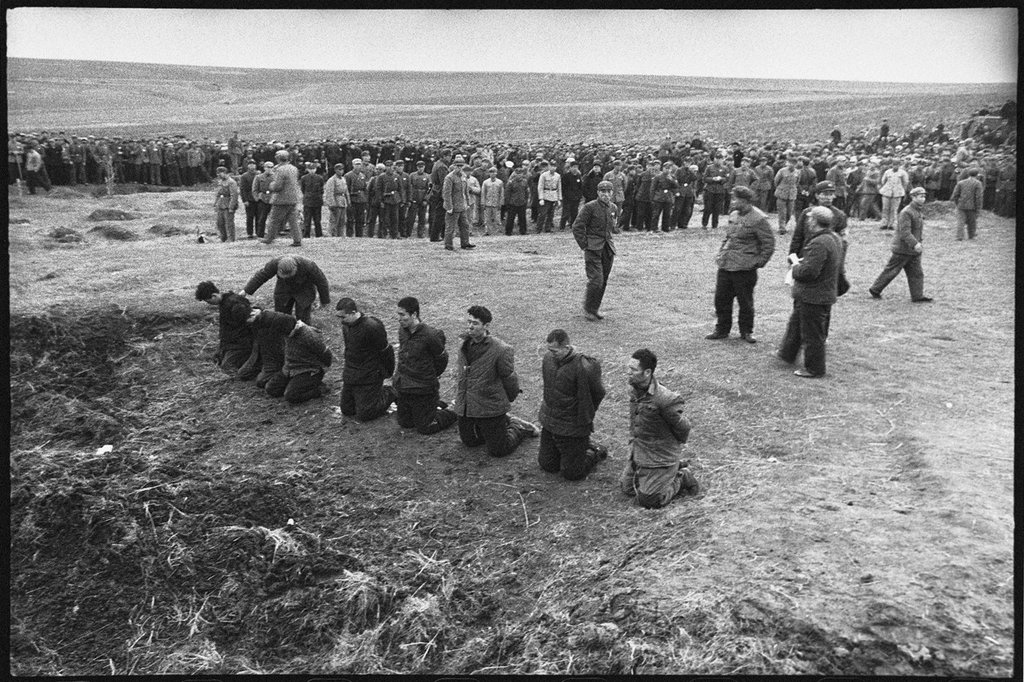

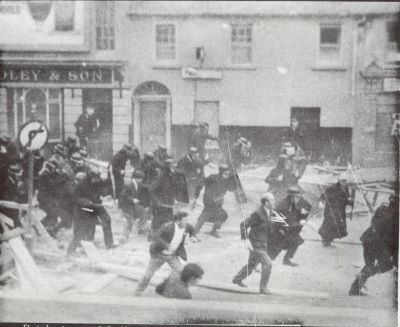
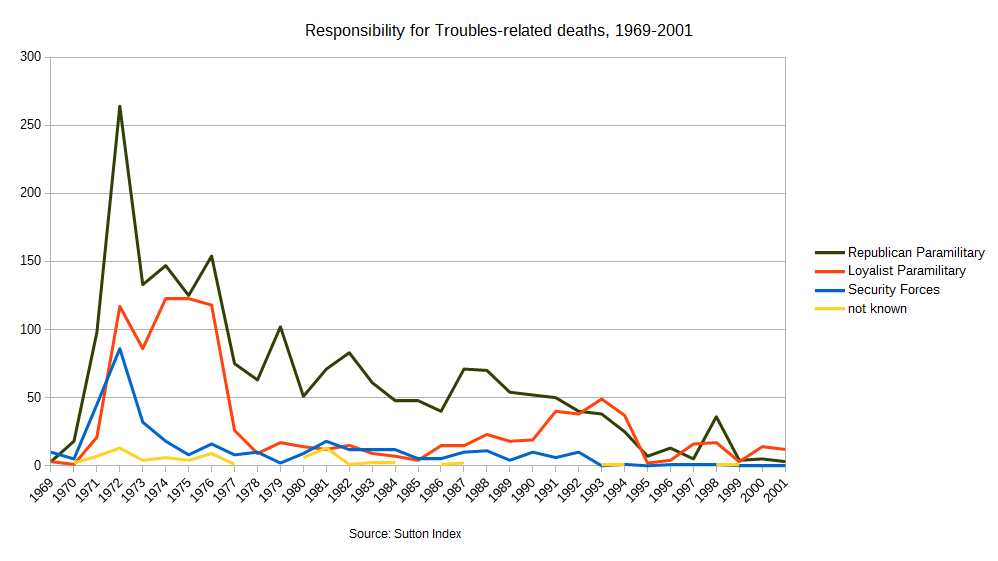
 evolutionistx

