Society seems split into two camps on the matter of intelligence. Side A believes that everyone is secretly smart, but for a variety of reasons (bad teachers, TV, racism, sexism, etc) their true intelligence isn’t showing. Side B believes that some people really are stupid, because they are bad people, and they therefore deserve to suffer.
Out in reality, however, there are plenty of good, decent people who, through no fault of their own, are not smart.
I’m not making my usual jest wherein I claim that about 75% people are morons. I am speaking of the bottom 40% or so of people who have no particular talents or aptitudes of use in the modern economy. For any job that isn’t pure manual labor, they will almost always be competing with candidates who are smarter, quicker, or better credentialed than they are. Life itself will constantly present them with confusing or impenetrable choices–and it will only get worse as they age.
The agricultural economy–which we lived in until 7 decades ago, more or less–could accommodate plenty of people of modest intellects so long as they were hard-working and honest. A family with a dull son or daughter could, if everyone liked each other, still find a way for them to contribute, and would help keep them warm and comfortable in turn.
When you own your own business, be it a farm or otherwise, you can employ a relative or two. When you are employed by someone else, you don’t have that option. Back in the early 1800s, about 80% of people were essentially self-employed or worked on family farms. Today, about 80% of people are employees, working for someone else.
Agriculture is now largely mechanized, and most of the other low-IQ jobs, whether in stores or factories, are headed the same direction. Self-driving cars may soon replace most of the demand for cabbies and truckers, while check-out kiosks automate retail sales. I wouldn’t be surprised to see whole restaurants that are essentially giant vending machines with tables, soon.
The hopeful version of this story says that for every job automated, a new one is created. The invention of the tractor and combine didn’t put people out of work; the freed-up agricultural workers moved to the city and started doing manufacturing jobs. Without automation in the countryside we couldn’t have had so many factories because there would have been no one to work them. Modern automation therefore won’t put people out of jobs, long-term, so much as enable them to work new jobs.
The less hopeful point of view says that we are quickly automating all of the jobs that dumb people can do, and that the new economy requires significantly more intelligence than the old. So, yes, there are new jobs–but dumb people can’t do them.
If the pessimistic view is correct, what options do we have? People are uncomfortable with just letting folks starve to death. We already have Welfare. This seems suboptimal, and people worry that many of those who receive it aren’t virtuously dumb, but crafty and lazy. Makework jobs are another option. If not awful, they can let people feel productive and like they’ve earned their income, but of course they can be awful, and someone else has to make sure the fake job doesn’t result in any real damage. (If they could work unsupervised, they wouldn’t need fake jobs.) Our economy already has a lot of fake jobs, created to make it look like we’re all busy adults doing important things and prevent the poor from burning down civilization.
People have been floating UBI (universal basic income) as another solution. Basically, all of the benefits of welfare without all of the complicated paperwork or the nagging feeling that some lazy bum is getting a better deal than you because everyone gets the exact same deal.
UBI would ideally be offset via an increase in sales taxes (since the money is initially likely to go directly to consumption) to avoid hyperinflation. This is where we get into “modern monetary theory,” which basically says (I think) that it doesn’t really matter whether the gov’t taxes and then spends or spendsand thentaxes so long as the numbers balance in the end. Of course, this is Yang’s big presidential idea. I think it’s a fascinating idea (I’ve been tossing it around but haven’t had a whole lot to say about it for about fifteen years) and would love to see the independent nation of California or Boston try it out first.
UBI doesn’t exactly solve the problem of the dumb–who still need help from other people to not get scammed by Nigerian princes–but it could simplify and thus streamline our current system, which is really quite unwieldy.
This is part two: Why are there suicide memes? If you don’t know what a suicide meme is, please see part one: What are Suicide Memes?
Memes, as used on this blog, are units of ideas. A suicide meme happens when you adopt the memes of people who want you dead. To the gazelle, the lion is a monster; to the lion, the gazelle is lunch. It does not benefit a gazelle to adopt the lion’s idea that gazelles are tasty, nor does it benefit the lion to sympathize with the gazelle.
Concurrent with the suicide memes infecting the West is an increase in actual suicides, which carry over into an overall increase in death:
Suicide memes aren’t exclusive to America. They pervade the West, from Britain to New Zealand. If you are inside the meme, you likely cannot see it–the world is simply operating in a rational way; once you are outside the meme, you cannot unsee it–the world is absurd.
The moment of fully understanding the suicide meme and realizing society is filled with them is, for many people, gut-wrenching. It is like having the ground suddenly pulled out from under you. Many people refer to it as “taking the red pill,” in homage to the scene in The Matrix in which Neo decides to wake up from delusion.
As I read the article about the photos, I felt a sense of disbelief. I wasn’t quite sure what I was reading was correct. … I spent the next few hours searching the subject online and found quite a bit more information, but no serious or credible refutation of the stories I’d just learned. The facts therein did not appear to be in much dispute. …
Then the strangest feeling came over me. …
The best description I can come up with is that it was a regret so intense it morphed seamlessly into guilt, as though I were responsible for something terrible, though I didn’t know exactly what. …
I sat in front of my computer and put my face down on the keyboard. I stayed in that position for a few minutes, energyless and drained. When I lifted my head I was surprised to find a few tears on my cheeks.
The experience was something akin to being married for thirty years, thinking your husband loving and faithful, and then by chance coming across evidence that he’d been living a double life all that time, with a wife and kids in another town. A sense of deep betrayal of a basic trust.
Waking up to the fact that you are surrounded by liars is not psychologically simple. How much of what you thought you knew is actually false? It is easy at this stage to feel like you are falling down a rabbit hole, to accept things as true simply because they go against popular narratives, to decide that reality must lie in some other, starkly different direction. Attempts to bring you back to reality are resisted because “reality” has already been proven to be a malicious lie bent on destroying you.
How to account for Americans being the most anxious, fearful, and stressed-out people among the supposedly advanced nations? Do we not live in the world’s greatest democratic utopia where dreams come true?
What if the dreaming part is actually driving us insane? What if we have engineered a society in which fantasy has so grotesquely over-run reality that coping with daily life is nearly impossible. …
You end up in a virtual world of advertising and agit-prop where manipulation is the primary driver of human activity. That is, a world where the idea of personal liberty (including any act of free thought) becomes a philosophical sick joke, whether you believe in the possibility of free will or not. You get a land full of college kids trained to think that coercion of others is the highest-and-best use of their time on earth — and that it represents “inclusion.” You get a news industry that makes its own reality, churning out narratives (i.e. constructed psychodramas) to excite numbed minds.
When people realize they are surrounded by lies and suicide memes, they start looking for someone to blame. If there are death memes, then someone must be trying to kill them.
This is when people start blaming the Jews.
Explicit aside: I don’t.
A young man recently walked into a synagogue in Poway, California, and opened fire. His rampage was stopped by an off-duty border patrol agent who was also carrying a gun, otherwise it most likely would have been far worse; as it was, one person died.
Why a synagogue? The Poway shooter blamed the Jews for the “white genocide” he saw around him.
“But there is no white genocide,” you might be objecting. Remember that the shooter lived in California. In 1970, California was 77% non-Hispanic white. Today, it is 38% white. 27% of Californians are immigrants, born in other countries. Since the Hispanic population is growing much faster than the others, the population of Californian children is 51% Hispanic and only 27% white.
Whether you call that “genocide” or not, the shooter is in fact living through a time when he can observe his own ethnic group shrinking as a share of the population. Meanwhile, housing prices in California have become absurd and the middle class is being squeezed out, but any suggestion that maybe immigration levels should be curbed is met with charges of racism, fascism, or worst of all, being a closeted Donald Trump lover.
So this guy looks around, realizes something is not right, and concludes that someone must be doing it on purpose. Of course, the Jews:
To my family and friends. I can already hear your voices. “How could you throw your life away? You had everything!…” I understand why you would ask this. But I pose a question to you now. What value does my life have compared to the entirety of the European race? Is it worth it for me to live a comfortable life at the cost of international Jewry sealing the doom of my race? …
“How does killing Jews help the European race? The European race is doomed? What are you talking about? These Jews were innocent!” Every Jew is responsible for the meticulously planned genocide of the European race.
So… he’s a bit off.
The real reason society has gone off the tracks is far less exciting than international conspiracies cackling in the night–the real reason is technology.
The internet is an interesting place. You have sites devoted to every possible interest, from coffee to AfroPop; you have communities at every level of reputation, from total anonymity to real names only. And it has long been observed that communities which allow anonymous posting swing more to the right, while communities where people use their real names swing to the left.
Reputation, at least in our society, is liberal.
There are several reasons for this, but the core, underlying one is probably mathematical: there are more people who aren’t you than are you. There are more people who aren’t white than are white. If you are talking to everyone (as social media platforms strive for) and you care about your reputation, then you want as many people as possible to like what you have to say.
“I love me and want to benefit myself at the expense of everyone else,” is not a message that is popular with everyone else.
“I love everyone else and want to benefit them at the expense of myself,” is a message that everyone else loves.
And that, right there, is how the suicide meme is born. The more time you spend on the internet in real-name, real-reputation circles, the more pressure you will feel to espouse leftist values, because these are high-status memes and because if you don’t, an angry mob might get you fired. See: James Damore.
When we come right down to it, most people are greedier than they want to appear. We’d all like to look like angels while not exactly acting like angels, and we’d like our neighbors to actually act like angels. There’s a lot of social pressure on people to behave like angels, and on the internet, where words are all that we see, the pressure to behave and desire to seem get blended into one enormous holiness spiral.
By contrast, in anonymous circles, things you say have much less impact on your reputation. It’s hard to holiness spiral if your words have no connection to you.
But let’s back up a minute, before the creation of WEIRD societies. HbdNrx on Twitter has a thread that perfectly sums up what I want to say, so this is a quote with some expansions:
“For the first few million years of our existence, humanity consisted of hunter-gatherer tribes who constantly conquered and raped and pillaged each other. Even chimpanzees fight wars over territory, killing and cannibalizing other chimps in the process. Violence was ubiquitous.
“The development of agriculture allowed larger settlements to form. Civilization began, first in the Middle East. Of course, people used their new-found technology and organization to firmly conquer and pacify their neighbors, in an orgy of violence followed by peace; we can still see the results in studies of Y-chromosomal diversity–it plummeted.
“Broadly speaking, in most areas suitable for agriculture, tribal disputes gave way to larger wars with armies. Cooperation was needed to compete. The spread of Christianity and the Catholic Church through the Roman Empire resulted in the break-up of tribal affiliations and reduced cousin marriage, especially within the Hajnal Line. IQ and cooperation were selected for during the Middle Ages, and the Renaissance was the eventual result.
“The printing press and base-ten numbers were imported and literacy exploded. We can probably blame Protestantism directly on the press, as with literacy and book ownership came the idea that ordinary people could read the Bible and form their own relationship with God. The power of the Church weakens, feudalism begins to fade, and parliaments are strengthened. Ideas like equal rights under the law are established during the Enlightenment.
“Slavery had been around since the tribal era, but now even slaves could read and write. For example, In 1789, Olaudah Equiano, an Igbo who had been kidnapped, enslaved, and then earned his freedom, published his autobiography, The Interesting Narrative of the Life of Olaudah Equiano, The book (plus the actions of other members of abolitionist societies) soon convinced the British to abandon slavery.
“Pretty soon whites across the literate world were saying, in essence, “Hey, those slaves are people too, why don’t they have rights?” Slavery was abolished in Britain in 1807; in 1794 and again in 1848 in France; throughout much of Latin America around 1826; Canada in 1833; the US fought a war that ended slavery in 1865. (By contrast, Mauritania didn’t abolish slavery until 1981, and Amnesty International estimates that 43,000 people are still enslaved in Mauritania. Slavery is also still a problem in Libya, and of course the territory controlled by ISIS.)
“So ideas about equality and cooperation were extended further and further, from slavery to voting to the Civil Rights Act. Whites, being fair-minded people who deeply believe in equality, listened to complaints from nonwhites of oppression and tried to make things better–so we got busing, school integration, affirmative action, and now, cities just straight up not prosecuting crimes.
“The point here is that there’s a trend from the very beginnings of civilization toward expanding circles of equality–from tribe to nation/empire to the inclusion of other racial groups (and animals, especially among vegetarians), and white people have been selected more for this than any other people on the planet.
“The trend is a natural result of technological changes, from literacy to the internet, and the need for broader cooperation in order to compete in the new tech environment–it takes a lot of trustworthy people working together to build a nuke or a railroad. Fast boat and air travel enabled mass immigration, and radio, TV, and the internet allowed us to hear the voices of those who might formerly have been called savages. The current “anti-racism” ideas are an extension of this trend, into the new memevironment of social media.
“A substantial portion of whites would never have been able to resist pleas for equal rights nor open borders. These whites look at the apparent unfairness of borders or seemingly arbitrary rules like apartheid and they naturally sacrifice to increase fairness. At least 20% of whites in the US are fundamentally hippie libs like this. Much of the ideological problem is that these people look at disparate outcomes and assume that there must be something unfair causing this inequality (completely ignoring biology and culture).
“Then you have the cuckservative types–the people with no ideological defense to the liberal accusations who just go along with it, and the people who actively promote cheap labor because it’s in their immediate interests. Most of them see themselves as “conservatives” simply because they believe in the liberalism of 30 years ago, rather than today. That’s most of the mainstream Republican party, >30% of whites.
“So we have at least half of whites basically opposed to doing anything to stop this trend, and we have nearly all the nonwhites advocating for their own interests. If you’re looking for people to blame, there it is–a majority of the population.
“Of course, we can also blame individuals like LBJ and other politicians at the time who pushed the civil rights act and the immigration act, and we can blame some of the acceleration of identity politics on postmodernist academics and the Frankfurt school. But by and large the trends are bigger than all of them, especially now that we have social media accelerating everything.
“These values of equality and cooperation are deathwish values in the global context, as we can see by the declining white % globally. So, the trend toward increasing equality and cooperation won’t go on forever because its strongest proponents are being selected against.”
In other words:
Technological and economic progress have expanded people’s social circles from their immediate tribes to cities and nations. These changes promote the spread of universalist memes. Many of these ideas were probably adaptive when they first arose, when people were just dealing with other people in their immediate communities, but are no longer adaptive due to our rapidly increasing ability to travel and communicate.
Horizontal (viral) memes have proliferated and adapted in the new environment of the internet, with nonwhites, especially, advocating for their own interests with the language of fairness/oppression.
Meanwhile, in academia, postmodernism–the idea that we should analyze why someone wrote what they wrote and how their background identity influences their opinions, rather than analyze what they actually wrote–has kicked objective reality out the window. See, for example, this list:
In general, suicide memes are a natural development of social and technological activity, although some groups are more into them than others. High-IQ, high-class people tend to favor suicide memes because they want to signal to potential partners their willingness to cooperate, not defect. Most of these people are well-meaning.
To summarize:
First, new technology makes communication easier, giving us suicide memes.
Second, people notice suicide memes and conclude that someone is trying to kill them.
Third, they decide that the Jews (who are disproportionately represented in academia and the real-name parts of the internet due to social status,) are trying to kill them.
Fourth, they strike back.
If you’re Jewish, this is a good time to realize that this trend is not working in your favor. (Please see my Open Letter on this subject.)
So how do I know the Jews aren’t secretly conniving in backrooms to fling open the borders and offer Affirmative Action to all?
Because the Lutherans are just as bad. Ever since the Biafran Airlift:
The Biafran Airlift was an international humanitarian relief effort that transported food and medicine to Biafra during the 1967-70 secession war from Nigeria (Nigerian Civil War). It was the largest civilian airlift, and after the Berlin airlift of 1948-49, the largest non-combatant airlift of any kind ever carried out. The airlift was largely a series of joint efforts by Protestant and Catholic church groups, and other non-governmental organizations (NGO)s, operating civilian and military aircraft with volunteer (mostly) civilian crews and support personnel. Several national governments also supported the effort, mostly behind the scenes. This sustained joint effort, which lasted one and a half times as long as its Berlin predecessor, is estimated to have saved more than a million lives.[1]
–or perhaps before–Christian churches in the US have played a significant role in both aid to Africa and resettling refugees in the US. The Lutheran Social Services of Minnesota, Catholic Charities, and Arrive Ministries are responsible for resettling at least 10,000 Somalis in Minnesota–a coincidentally very profitable business.
Before the writing of “We Are the World”, American entertainer and social activist Harry Belafonte had thought for some time to have a song recorded by the most famous artists in the music industry at the time. He planned to have the proceeds donated to a new organization called United Support of Artists for Africa (USA for Africa). The non-profit foundation would then feed and relieve starving people in Africa, specifically Ethiopia, where around one million people died during the country’s 1983–1985 famine.[1][2]
There are a lot more Christians trying to resettle refugees in the US than Jews.
Moreover, undermining Western Civilization doesn’t benefit the Jews. America is the least anti-Semitic country in the world. Antisemitism is much higher in Latin America than the US. It’s much higher in Africa and China. It’s a little higher in most of Europe. It’s way higher in Islamic countries. So outside of a couple other WEIRD countries in northwest Europe, immigration from pretty much any other country on Earth is bad for the Jews.
Jews don’t want to die, and they bleed just like anyone else. I’ve met Jews who’ve fled South Africa, Detroit, New York, and LA. Always because of violence (sanitized as “crime”).
Here’s Bret Weinstein, formerly of Evergreen College, on the death memes that drove him out:
There’s an excellent three-part documentary on Youtube about how the (mostly) black students at Evergreen rioted, hunted Bret down with bats and tazers, and eventually drove him out of the university for the literal crime of teaching on campus while white.
Bret’s Jewish, in case you missed that. As far as non-whites are concerned, Jews are white and are treated accordingly. It’s in the Jewish interest for America and Britain to be nice, civilized, non-antisemitic countries that support Israel; not for them to degenerate into crime-ridden, antisemitic shitholes where Jewish wealth is taxed to fund welfare programs for non-whites.
If you’re looking for someone to blame, maybe blame the guys hunting down white academics with bats and tazers.
Of course, even if they aren’t trying to destroy civilization to benefit themselves, Jews could just be accidentally doing it because they’re stupid. This wouldn’t be a conspiracy, but people do actually do stupid things rather often. Jews are, in fact, disproportionately left-wing in the US (but not in other Western countries–in Britain, for example, they vote for the Tories).
But there is very little functional difference between liberal Jews and liberal non-Jews. Unitarian Christians and Reform Jews are practically the same (and many Reform Jews attend Unitarian churches). Orthodox Jews are conservative, keep to themselves, and basically avoid American politics; they certainly aren’t encouraging people to crossdress or get abortions, and most of them voted for Trump (54%–which is identical to the percent of whites who voted for Trump.)
Okay, so we know we have a problem: suicide memes, and we have a second problem: people who are getting violent about suicide memes.
What are the solutions? Getting violent isn’t a solution. Violence only works if you have the support of society behind you, and society supports people with high-class reputations. Society supports death memes; society does not support fighting back against death memes. Right-wing violence does not work because reputation is leftist. Making things worse is not a solution, but getting around the reputation problem could be.
The next bright idea I’ve seen people advocate is trying to convince everyone that humans races don’t exist.
This is a lie, and lying to people who are already onto the fact that you are lying to them is not going to work. They will just conclude that you are lying because you want to kill them. Remember that one of the indicators that genocide is likely to happen–as articulated by Genocide Watch–is “Systematic official denial of the existence of particular distinct groups.” By claiming that races don’t exist, you are walking straight into the paranoia of people convinced that you are trying to genocide them.
The truth of the “human races share 99.9% of their DNA in common” statement lies in the fact that the changes to our DNA that make genes do different things are, in fact, very small. The lie is that the size of the changes matters at all.
Mike came in the house, put away the groceries, cooked dinner, set the table, and said, “Let’s eat, kids!”
Mike came in the house, put away the groceries, cooked dinner, set the table, and said, “Let’s eat kids!”
These sentences are over 99% identical. What’s the big problem?
And besides, humans managed to slaughter their neighbors for millions of years before we discovered genetics; we’ll certainly be able to keep slaughtering each other even if we forget about genetics.
The best solution I can think of to suicide memes is to become aware of them, stop spreading them, and point out when others spread them.
By the way, if you haven’t read my previous work on memes or aren’t very familiar with meme theory, here are a few relevant posts: Dangerous Memes, Mitochondrial Memes, and more memes.
Memes, as used on this blog, are units of ideas. A memeplex is a set of ideas that usually come together. A god who dies and is reborn is a meme–the idea shows up in many religions. Christianity is a memeplex–a whole set of ideas about god, morality, religion, and history that normally travel together.
A suicide meme happens when you adopt the memes of people who want you dead. To the gazelle, the lion is a monster; to the lion, the gazelle is lunch. It does not benefit a gazelle to adopt the lion’s idea that gazelles are tasty, nor does it benefit the lion to sympathize with the gazelle.
Here are some suicide memes in action:
America:
So there’s a second thing in that black box: an unrelenting string of immigration. Non-stop. Non-stop. Folks like me who are Caucasian of European descent, for the first time, in 2017, will be an absolute minority in the United States of America. Absolute minority. Fewer than 50% of the people in America will be, from then on, of white, European stock. That’s not a bad thing–that’s a source of our strength.
“Look, to be totally honest, if things are so bad as you say with the white working class, don’t you want to get new Americans in?”
In Grand Rapids, Michigan, it may soon no longer be just unfair to call the police on people of color who have done nothing wrong. It may be downright illegal. The City Commission held a public hearing Tuesday on a proposed human rights ordinance that would make it a criminal misdemeanor to “racially profile people of color for participating in their lives,” the city said in a statement. The charge could result in up to a $500 fine, according to CNN affiliate WOOD.
Note: it is already illegal to call in fake police reports.
Dallas County District Attorney John Cruezot announced earlier this month he no longer plans to prosecute low-level crimes, including theft cases involving personal items less than $750 in value in many instances.
Seth Wynes, a PhD student at the University of British Columbia, researches the personal choices that have the highest impact on climate change. …
His study found that the four biggest ways individuals can help cut down on emissions are:
Have a smaller family
Eat a plant-based diet
Avoid air travel
Live car-free
Here’s a graph from the article:
Note that the CBC is a “Canadian federal Crown corporation;” Crown corporations are state-owned enterprises owned by the Sovereign of Canada. The CBC receives funding from a variety of sources, including taxes.
What makes babies so bad for the environment? Well, they’re people, and people use resources.
Of course, immigrants are also people, and moving from a low-carbon footprint country to a high-footprint country like Canada also has an impact on global warming.
In 2016, Canada admitted 296,346 permanent residents, compared to 271,845 the previous year – the highest admissions levels since 2010.[1] …
According to data from the 2016 census by Statistics Canada, 21.9% of the Canadian population reported they were or had ever been a landed immigrant or permanent resident in Canada …
The three main official reasons given for the level of immigration are:
The humanitarian component – Relating to refugees.
The economic component – Attracting immigrants who will contribute economically and fill labour market needs.
Well, gee, Canadian government, couldn’t you just fill your labour market needs by having more children instead of using your own people’s tax dollars to tell them not to have children and then importing people to fill the jobs left vacant by those missing citizens?
Since 2008, a welcome to country has been incorporated into the ceremonial opening of the Parliament of Australia, an event which occurs after each federal election. The welcome includes a speech as well as traditional music and dance. Given that Parliament sits in Canberra, traditionally part of Ngambri country, a Ngambri elder officiates.[8] …
If a local elder is not available, the host of an event can offer an acknowledgement of country in place of a welcome (though the two terms are sometimes used interchangeably). The following form of words, published by the Victorian Government, is typical:[12]
“I acknowledge the Traditional Owners of the land [or country] on which we are meeting. I pay my respects to their Elders, past and present, and the Elders from other communities who may be here today.”
I have a very functional idea of ownership. You own something if you can use it and can stop others from using it. Rights of use and access are fundamental to property; the modern Australians own “Australia” because they exert military control over the continent. Stop paying your taxes in Canberra, and the guy who shows up to put you in prison will be a representative of the Australian government, not the Ngambri–proving that this is Australian land, not Ngambri.
What is the point of lying to children about who owns the land they’re sitting on?
'I think it's particularly important to do this in London, this is the former hub of empire. Australia's story of colonisation, celebrated on Australia Day, really started here.'
According to the description of the video, provided by Canadian Broadcasting Corp, they do this every day.
These students are being prepared for their own slaughter.
TeenVogue, which has gone from “fashion magazine” to “Tumblr insanity” and is thus a window into what teenage girls are thinking and why you should never allow your children on the internet, has an article on why Indigenous Land Acknowledgements are important:
By now, many know that the colonization myth we learned in school doesn’t tell the whole story of how the Americas were settled. In 1492, Christopher Columbus sailed the ocean blue, but what he discovered was not a “New World” — it was one inhabited by millions of indigenous people. …
I apparently hate life enough to click on the “colonization myth” link and it’s full of garbage like “[The Taino] had a highly evolved and complex culture.” No. The Taino had no steel and no plows. They still used stone tools and practiced a combination of horticulture and hunter-gathering. They had neither writing nor math, and lacked the ability to navigate to nearby Africa or Europe. Their society had only two major social classes, commoners and nobles. The Taino might be the nicest people on earth, but calling their culture highly evolved is an outright lie.
Criticizing Teen Vogue for being stupid is like shooting fish in a barrel, but it provides a lesson in the lies young people are being told. In sentence two, the author pretends not to understand how language works to take a dig at Europeans, those stupid people who thought they’d discovered a whole “New World” even though–get this–there were already people living there. Never mind that no one ever meant “New World” as signifying, “Wow, a new continent just rose out of the ocean!” Europeans knew the “New World” had people in it because Columbus brought Tainos back to Europe on his very first voyage. They knew Cuba was “old” to the people living there. They called it “new” because it was new to them, which is pretty obvious if you’ve ever talked to another human being in your entire life:
“Hi! Do you like my new dress?”
“What? You got that at Goodwill, so it’s your old dress, because it’s not new anymore to its original owner,” said no human, ever.
Back to Teen Vogue:
Living in villages, bands, and confederacies, their traditional territories spanned the entire continent. Indigenous people still live among us, yet how many of us could name the specific tribe or nation whose land we live on?
Unless you live on a reservation, you live on the land of the country you live in. For example, I live in the US. This is American land, because my ancestors conquered it. That makes it my tribe’s land. The Delaware Indians might have owned this land 400 years ago, but they do not own it today. If you are in Canada, you live on Canadian land. Teen Vogue–and the Canadian government–are trying to pull a conceptual bait-and-switch where they replace current land ownership with ancient land ownership in order to delegitimize the land’s current owners.
In Australia, New Zealand, and Canada, it’s harder and harder to not be aware. That’s because school days and meetings — and even hockey games — often begin with a “land acknowledgment,” a formal statement that pays tribute to the original inhabitants of the land. Indigenous peoples have acknowledged one another’s lands for centuries, but in the past decade, some Western governments have begun to promote the practice.
No human, anywhere on earth, is the “original inhabitant” of the land; we did not spring fully formed from the dirt. Humans moved. They fought. They conquered. They moved some more. Every single inch of territory outside of Antarctica has been conquered and re-conquered over and over throughout human history (and before.) Even chimps, lions, and wolves have territory that they conquer and defend from others.
The claim that Indigenous peoples “have acknowledged one another’s lands for centuries” is a bald-faced lie. (Incredibly, the New York Times also repeats this obvious fiction.) “Indigenous peoples” conquered their neighbors and defended their own tribal territories from invasion just like all other humans. I guarantee you the Aztecs didn’t stand up at the beginning of their ceremonies and announce that “This city was built on traditional Huastec land, and by the way, they are delicious with a nice mole. Okay, let’s get someone up here for a nice, indigenous heart-ripping out sacrifice.”
Land acknowledgments are, on the surface, stupid. If you care about native peoples, go do something nice for them. Donate to a college scholarship fund, help build houses, or be a friend and invite someone over for dinner. Sticking a modified version of “Hey, we conquered you,” at the beginning of speeches isn’t helping anyone.
But from the point of view of convincing people they don’t have a right to their own land, they seem effective. For children, having all of the adult authority figures in their lives telling them every day that they have no legitimate right to the land they live on and that it was “stolen” from others is bound to have an effect.
No one else in the world does this. Turks do not start every school day with an announcement that they are living on land stolen from the Anatolian and Byzantine peoples. Taiwanese schools don’t start the day by acknowledging the Aboriginal Taiwanese; Pakistanis don’t apologize to the Indus Valley People.
In fact, it was from a Pakistani acquaintance that I first heard an articulate defense of loving one’s own nation that helped snap me out of my own SJW-induced-self-loathing fugue. The conversation, roughly paraphrased, went like this: I criticized Pakistan for being, in many ways, not very good. He responded defensively. I responded by criticizing him for not criticizing Pakistan. He responded that he was perfectly aware of his country’s many defects, for goodness’ sake, he lives there, but it remains his country, and like his family, he loves it. Our parents aren’t perfect, they make mistakes, but we still love them. So, too, do we love our countries.
This is a healthy attitude.
Do you think genocide simply begins without warning?
Did the Hutus just wake up with a bad case of the Mondays and decide to go kill 70% of the Tutsis?
Of course not. Anti-Tutsi sentiment had been brewing since at least WWII. Hutus had been importing large numbers of machetes and training bands of children in their use for chopping up humans for years. Propaganda had been featured in Rwandan newspapers and radios for years. The killing of nearly a million people in 100 days took much longer to prepare.
The Tutsis had the misfortune of being a market-dominant minority–always a dangerous position. (I don’t think I need to educate anyone on the history of Nazi propaganda about the Jews.)
The difference between a religion and a cult is that a cult asks you to sacrifice everything for the cult. Incidentally, so does Nike.
In South Africa, the popular buzz-phrase is “expropriation without compensation.”
You might think that explicitly calling it “expropriation without compensation” is oddly honest for anything done by a government, since governments usually try to hide their harmful actions, but when a policy of destroying a minority is clearly desired by the majority, there’s no reason not to advertise it.
“We’ve not called for the killing of white people–at least for now. I can’t guarantee the future.”–Julius Malema, leader of the Economic Freedom Fighters of South Africa
Of course, they tried this in Zimbabwe, which lead to the total collapse of Zimbabwe’s economy.
South Africa is a modern, industrial country whose economy is not agrarian–though of course people still need to eat–and thus land redistribution would only reduce the amount of food being produced without actually getting people the kind of jobs they need to be doing, like running electrical power plants. South Africa has plenty of farmers already; like all industrialized nations, they need more people in industry, medicine, education, and technology.
Today, the disparity in education, skill, and income continues. Two recently released World Bank reports further show that the gap is not only widening, it is intergenerational. …
The middle class has particularly suffered from South African economy’s inability to create new jobs. To achieve a significant reduction in the country’s unemployment rate, the World Bank estimates 600,000 jobs would need to be created every year. The economy is producing half that number. Most of the new jobs are in the services sector, while low-skill agriculture and manufacturing jobs are on the decline. …
Post-apartheid economic policies have been unable to find a balance between job creation and economic growth. During the Mandela years, the country tried the Reconstruction and Development Program, which focused on social security but the program was costly and was not able to broaden the tax base. Then there was Growth, Employment and Redistribution, which tried to stimulate growth and reduce inflation and the deficit, but failed to create many jobs. It unsuccessfully depended on a trickle-down effect to grow the middle class. …
These policy decisions have created a so-called “missing middle” in various sectors of society which is becoming increasingly dissatisfied. It is glaring in South Africa’s higher education. Categorized as households who earn less than 600,000 rand per year ($47,800), the students who make up the missing middle don’t qualify for national assistance, but they simply can’t afford to pay tuition.
They made up the thousands of young people who created the #FeesMustFall movement, and they are overwhelmingly black. Only 5% of black students are likely to graduate, compared to 15% in 1975.
South Africa’s performance on a range of social, economic and governance measures deteriorated more in the past 12 years than any other nation not at war, according to Eunomix Business & Economics Ltd.
The decline is likely to continue as the country wrestles with the consequences of nine years of worsening corruption and policy paralysis under former President Jacob Zuma, the Johannesburg-based political-risk advisory company said. The fragility of the economy may also limit the tenure of his successor Cyril Ramaphosa, who faces his first national election on May 8, it said.
The majority of trainee primary school teachers are white, Irish and Catholic and do not reflect our diverse population, new research has found. …
The study calls for further discussion of measures that can be taken to attract and recruit more individuals from minority groups into the teaching profession.
Ireland has too many Irish teachers! The solution is to fire the Irish teachers and hire non-Irish teachers.
Oh, sorry, the solution isn’t firing them. That would be too obvious. It’s just not hiring them anymore. Official discrimination against the Irish in Ireland. Because having Irish people working in their own country is a problem.
Dr Heinz said it is important we take notice of the widening diversity gap and identify potential barriers for individuals from underrepresented groups.
“For many students who are refugees, have certain learning difficulties, or have come from abroad and did not speak English when they enrolled in school, the door to primary teaching is closed early as they can be granted an exemption from the otherwise obligatory Irish instruction at school, where Irish, English and Maths are essential subjects for applicants to primary teacher education programmes in Ireland, a barrier to non-Irish nationals who weren’t educated in Ireland,” said Dr Heinz.
The Irish language might matter to the Irish, but looks like we’ll have to get rid of it accommodate newcomers who can’t be bothered to learn it. Slán!
Also from Ireland:
Globalization of Ireland
"We can't have Ireland just for the Irish", "Ireland has to be & has always been a very globalized country"- Social Democrat candidate Sarah Durcan
Social dems took peaceful Sweden & turned it into a country with “no go zones” & frequent grenade attacks pic.twitter.com/mwcnN42fo5
Mathematicians who want tenure at UCLA have to do more than show a facility with numbers. They also have to pledge in writing a commitment to diversity, equity, and inclusivity.
In fact, all professors applying for a tenure-track position at UCLA must write a statement on their commitment to diversity, showing, for example, their “record of success advising women and minority graduate students,” according to the UCLA’s Office of Equity, Diversity and Inclusion. …
The University of California system is especially active – UCLA, UC Riverside, UC San Diego, and UC Berkeley all require such statements. UC Santa Cruz requires them for candidates for faculty Senate positions. …
No one knows how many schools require such diversity statements, but the practice appears to be in vogue. Vassar College, for example, requires tenure-track job candidates to write about their contributions to social justice. Both Vanderbilt University and the University of Pennsylvania provide guides on how to write an effective diversity statement.
Never mind whether a teacher is good at teaching; you have to write an essay about how committed you are to the quest for fewer white men doing your job.
These are just a few examples of death memes, picked from different countries. Death memes have become so pervasive that they roll off the tongue; in the UK, a white woman comments on a painting of students who died in WWI:
“Mark my words- we’re taking down the mural of white men in the uni Senate Room, even if I have to paint over it myself”.
I doubt she even knew at the time what it was. People just signal their hatred of white males reflexively.
The death meme is simultaneously telling people to have fewer children for the environment and that we need more immigrants to fill jobs. It’s telling people that all cultures are good–but yours is bad. It’s saying that we should not blame a whole culture for the actions of one person when someone attacks you, but the whole culture is responsible when the attacker hails from your culture. It’s tearing down people’s statues and painting over their murals, attacking their history and telling them their heroes were evil.
The effects of death memes are, unfortunately, death:
Yes, caring about your own stuff or your own culture’s stuff over another people’s stuff shows in-group bias. That was inherent back there in the words “your own.” It’s yours. Of course you care about it.
Only deities achieve perfect love. Even Jesus does not call on people to love strangers; he commands his followers to love each other and love their neighbors.
What does tamed mean?” [asked the Little Prince] …
“It means to create ties,”… the fox said. “For me, you’re only a little boy, like a hundred thousand other little boys. And I have no need of you, and you have no need of me, either. For you I’m only a fox like a hundred thousand other foxes. But if you tame me we’ll need each other. You’ll be the only boy in the world for me. I’ll be the only fox in the world for you.” …
And [the Prince] felt very unhappy. His flower had told him she was the only one of her kind in the whole universe. And here were five thousand of them, all alike, in just one garden! ….
And then he said to himself, I thought I was rich because I had one flower, and all I own is an ordinary rose… and he lay down and wept. …
Then [the fox] added, “Go look at the roses again. You’ll understand that yours is the only rose in all the world.”
The Little Prince went to look at the roses again. “You’re not at all like my rose. You’re nothing at all, yet,” he told them. “No one has tamed you and you haven’t tamed anyone. You’re the way my fox was. … But I’ve made him my friend, and now he’s the only fox in all the world.” …
“Of course, an ordinary passerby would think my rose looked just like you. But my rose, all on her own, is more important than all of you together, since she’s the one I watered. … Since she’s my rose.”
— Antoine de Saint-Exupery, The Little Prince
The inverse of loving what is yours is that you do not love what is not yours.
Part of the bittersweetness of the Little Prince is how closely it parallels the author’s own life, for not only did Saint-Exupery crash land in the Sahara, and not only was the rose based on his own wife, but he also fell from the sky and died when his plane was shot down over the Mediterranean during WWII.
Chinua Achebe’s Things Fall Apart follows the life of Okonkwo, a (fictional) Nigerian Igbo man who lived in a small village in the 1890s. The story follows Okonkwo’s determination to rise from nothing, slough off the shame of his father’s laziness, cowardice, and debt, and make a name for himself. Through Okonkwo’s eyes, we see the culture of the Onitsha Igbo, a real people, prior to the arrival of the British.
Then Okonkwo murders his foster son because the village authorities decided he should be killed (to avenge the death of a woman from Okonkwo’s tribe) and, as the title says, things fall apart.
Turning and turning in the widening gyre
The falcon cannot hear the falconer;
Things fall apart; the centre cannot hold;
Mere anarchy is loosed upon the world,
The blood-dimmed tide is loosed, and everywhere
The ceremony of innocence is drowned;
The best lack all conviction, while the worst
Are full of passionate intensity.
— W. B. Yeats, The Second Coming
It’s an interesting work from a cultural, historical perspective.
We cannot justify Okonkwo’s culture, nor Okonkwo himself. I do not think Achebe means to. It was a culture that murdered innocent people, forced some to be permanent “outcasts,” and sanctioned the beating of women and children. Okonkwo beat his wives and children (and as mentioned, murdered his foster son to avoid looking “weak” or “cowardly” in front of the other villagers.)
And yet, we hear Achebe’s voice saying, it was theirs.
My mother is not perfect, yet she is mine. My people are not perfect, yet they are mine. My culture is not perfect, yet it is mine. Okonkwo was a beloved husband, friend, leader, and father. And people love what is theirs.
Of course, taking another perspective, we could also read the novel as “Sure, the British put a stop to many terrible things, but they were SMUG about it!”
I can’t put much stock in the position that otherwise moral people committed evil acts simply because of their culture, since culture itself comes from the people in it. “I was only following orders” stopped being an excuse during the Nuremberg Trials. We moderns are expected to question and resist our culture at every turn, and I am not inclined to extend to Oknkwo generosity that would not be extended to me.
Of course, the Igbo are not the only people to have done terrible things. We all have sinned. Yes, the French committed crimes in the course of colonialism. So did the British:
The British had difficulty conquering Igboland, which lacked central political organisation. In the name of liberating the Igbos from the Aro Confederacy, the British launched the Anglo-Aro War of 1901–1902. Despite conquering villages by burning houses and crops, continual political control over the Igbo remained elusive.[41][42] The British forces began annual pacification missions to convince the locals of British supremacy.[43] …
After establishing political control of the country, the British implemented a system of taxation in order to force the indigenous Africans to shift from subsistence farming to wage labour. Sometimes forced labour was used directly for public works projects. These policies met with ongoing resistance[71][72]
Of course, the British also did their best to put an end to the international slave trade and stopped the Igbo practice of human sacrifice:
However, animals were used to remove evil from the land. At times during pestilence, palm fronds, an animal or a human being will be tied at the entrance of the town with hope that the disease will enter into these objects and spare the inhabitants. To be attacked by such animal is regarded as ill luck and these living sacrifices are not eaten by anyone. In the past, two living beings were buried along side chiefs as servants to serve him in the spirit world. Slaves were usually used for this.
You can appreciate the good in a culture–and people–without accepting their evil.
Have you finished the book, yet? What do you think of it?
If you haven’t started yet, don’t worry–we’ll continue this conversation in a week.
The out-of-Africa theory basically says that humans evolved in Africa, then spread in several pulses across the rest of the planet. The first hominin to leave Africa–as far as we know–was Erectus, followed by the Neanderthals/Denisovans, and finally Sapiens. Where exactly smaller, less well-known hominins like Homo Floresiensis fit into the picture we don’t know, yet.)
One of the incredible things about human evolution is just how many other human species we used to co-exist with. We shared this earth with at least 8 other species of human, met and mated with at least 4 of them. Before us came a proliferation of australopithecines.
Today, there is only us. This stunning diversity of upright apes has been winnowed to a single line. Species that had survived for thousands if not millions of years disappeared, either because they died out or were wiped out. We, sapiens, are the last ones standing.
Humans met Neanderthals. We interbred, briefly. Then the Neanderthals died out. Humans met Denisovans. We interbred, briefly. Then the Denisovans disappeared. Humans met so-called “Ghost populations” in west and southern Africa and interbred. The ghosts then disappeared. It’s all very mysterious how every other species of hominin and australopithecine seems to have died out immediately after we sapiens arrived in the area.
This implies, then, that sapiens didn’t live in these areas during the thousands or so years before we wiped out the locals (though some small exceptions may exist.)
So where did we live?
The West African Ghost Population contributed a big chunk of DNA to modern humans a mere 50,000 years ago–around the same time as sapiens were mating with Neanderthals. This seems to have been a much more significant encounter than the one with Neanderthals–perhaps many of these “ghosts” joined the sapiens who moved into their area.
So west Africa was likely not inhabited by modern humans before 50,000 years ago.
Homo naledi is too small to have co-existed with us, effectively ruling out their part of South Africa during that period, and the Pygmies probably interbred with their mystery hominin around 35,000 years ago, so that rules out the Congolese forest area.
The Neanderthal ancestry is in pretty much everyone not in Africa, (and a little in Africa due to recent back-migration) which is pretty strong support for the out-of-Africa theory. The most parsimonious explanation is that a single population split, and half of that population, as it entered Eurasia, encountered Neanderthals, while the other half traveled deeper into Africa and encountered African hominins.
East Africa/the horn of Africa region remains, therefore, the most logical spot to locate Homo sapiens immediately before this splitting phase, but I wouldn’t rule out the Middle East.
On the other hand, Homo sapiens’s ancestor, Homo heidelbergensis, lived in Africa, Europe, and the Middle East for thousands, possibly a million years (depending on how we classify the similar bones of Homo antecessor, who lived near Norfolk, England, about 950,000 years ago. Homo heidelbergensis’s (probable) ancestor, Homo erectus, lived in Africa, Europe, and Asia for over a million years.
Here’s where it gets complicated, because while species like the little hobbits from Flores are clearly different from other varieties of Homo, there are no clear dividing lines between folks like erectus, heidelbergensis, and ergastor. We have a bunch of bones, a few nice skulls, scattered across continents and centuries, from which we try to derive a vague sense of whether this population and that population were similar enough to consider them a single species. Quoting Wikipedia:
Although “Homo ergaster” has gained some acceptance as a valid taxon since its proposal in 1975, ergaster and erectus since the 1980s have increasingly come to be seen as separate (that is, African or Asian) populations of the larger species H. erectus. … The question was described as “famously unresolved” as of 2003.[10] Sura et al (2007) concluded that Homo erectus “was a likely source of multiple events of gene flow to the Eurasian continent”.[11]
The discoveries of the Dmanisi skulls in the South Caucasus since 2005 have re-opened this question. Their great morphological diversity suggests that the variability of Eurasian H. erectus already includes the African fossils dubbed H. ergaster. The discovery of Dmanisi skull 5 in 2013, dated to 1.8 million years ago, now dates evidence of H. erectus in Eurasia as of virtually the same age as evidence for H. ergaster in Africa, so that it is unclear if the speciation of H. erectus/ergaster from H. habilis took place in Africa or Asia.[12] This has reinforced the trend of considering H. ergaster as synonymous with H. erectus, a species which would have evolved just after 2 million years ago, either in Africa or West Asia, and later dispersed throughout Africa and Eurasia.[13][14]
Homo habilis, by contrast, is (so far) only found in east Africa.
What does it mean to evolve in a place? Habilis, as far as we know, actually did evolve in Africa. It didn’t leave Africa; neither did the australopithecines (unless one of those little hobbity folks out in the Philippines turn out to be australopiths, but that would be very remarkable). But after that, “humans” spread from Africa to Europe and Asia with remarkable speed. They lived in England almost a million years ago. And within this range, we seem to have become repeatedly isolated, speciated, and then met back up again when the weather improved.
Personally, I wouldn’t say that the out of Africa theory is wrong. It is still the most parsimonious explanation of human evolutionary history. However, I would say that it simplifies a huge chunk of our history, since for most of our time on this earth, our range has been quite a bit larger than Africa.
The most exciting finding of the past two decades in biological anthropology has been, without a doubt, evidence for interbreeding between Homo sapiens, Neanderthals, Denisovans, etc. and the sheer multiplicity of new hominin species being uncovered.
Exactly where the lines between species lie is a bit of a matter of semantic debate–where exactly did our ancestors end and Homo sapiens begin? Should we classify Neanderthals and Sapiens as one species if we interbred? etc–but if we accept the current classifications as decent approximations, we have:
Sorry, I realized it would be much more efficient if I just grabbed the family tree off Wikipedia instead of copying it over bit by bit. The top part of the tree got cut off, so I’ll note that Homini (6.3 million years ago) includes us + chimps, while Hominina (5.7 million years ago) has no chimps, but includes australopithecines. Gorillas are way back in Homininae, with an e. Homo, our genus, includes all of the “human” species, but usually doesn’t include australopithecines.
There is further debate on exactly who descended from whom. We’re finding new fossils all the time, which is quite exciting, but our current record is not nearly as complete as we’d like it to be. So sometimes branches get moved around or re-categorized as more data comes to light.
The most recent notable additions to our genus are the Denisovans, Homo floresiensis, Homo luzonensis, Homo Naledi, Homo doesn’t have a name yet, and more Denisovans.
You have probably heard of the “hobbit,” Homo floresiensis. The remains we have uncovered of this diminutive hominin are remarkably good, including a skull in great condition (despite some damage caused after excavation.) They lived on the island of Flores from about 200,000 to 50,000 years ago (though their arrival may get pushed back considerably because there are stone tools on Flores that are much older–700,000 years old–we just don’t know yet who used them.)
The hobbits are remarkable in multiple ways. First, they lived in an area that was not connected to the mainland by any landbridges–that is, they had to swim, boat, or otherwise be carried to their island. I am skeptical of the idea of anyone surviving a tsunami as a means of populating an island, but they arrived in an era when, as far as we know, humans had yet to build boats. So perhaps their ancestors were among the first humans to build boats, and we just haven’t found the remains of their crafts (wood being a material that degenerates very quickly.)
Second, the Hobbits are most likely descended from Homo erectus, who lived nearby on mainland Indonesia (at the time, connected to the rest of Asia via a landbridge), but are morphologically very different. They are tiny–shorter than pygmies, Homo erectus, or even australopithecines.
There is much debate about whether they are descended directly from erectus, or part of a sister-clade to erectus that descended from a common ancestor. It was previously believed that erectus was the first hominin to leave Africa, but if Floresiensis is not descended from erectus, Flores could be the first.
Now a similarly diminutive hominin has turned up in the Philippines, also past a significant water barrier that would require some effort to cross. It has been dubbed “Homo luzonensis.“ Not much is known, yet, about luzonensis, (we haven’t found as many of its bones), but what we do know is tantalizing:
It was soon apparent to Détroit that the remains featured a puzzling mosaic of traits both modern and ancient. “Each of the features [of Homo luzonensis] corresponds to some hominin or another,” he says. “But the combination makes for something really unique. There’s no known species with this same suite of features.”
They’re small, possibly even smaller than the Hobbits. Their feet resemble australopithecines, but australopithecines supposedly died out a couple million years before Luzonensis arrived on the scene. And their teeth were “remarkably uniform,” which probably sounds boring to anyone who isn’t a dentist, but provides strong evidence of them being a different species.
Two island dwelling species in the same area supports the idea that their ancestors either developed boats or were remarkably skilled at surviving tsunamis, and that southeast Asia was a remarkable hotspot of hominin diversity.
And then there are the Denisovans!
Denisovans are mysterious because we have so few of their bones–a chunk of skull was recently uncovered, but we have no jaws, no faces, no ribs, etc–so we don’t have a good idea of what they looked like. What we do have are Denisovan DNA (extracted from those fragments of skeletons) and traces of Denisovan DNA in modern humans.
Oddly, those Denisovan bones turned up in Siberia (a good place for preserving old bones, but not such a great place for humans adapted to warm climates) while the humans with Denisovan DNA live in modern Papua New Guinea and nearby areas.
The obvious answer to this puzzle is that both the Denisovans had a much broader range than one cave in Siberia and the ancestors of modern folks from PNG used to live in different areas than they do now.
… modern Papuans carry hundreds of gene variants from two deeply divergent Denisovan lineages that separated [from each other] over 350 thousand years ago. Spatial and temporal structure among these lineages suggest that introgression from one of these Denisovan groups predominantly took place east of the Wallace line and continued until near the end of the Pleistocene. A third Denisovan lineage occurs in modern East Asians. This regional mosaic suggests considerable complexity in archaic contact, with modern humans interbreeding with multiple Denisovan groups that were geographically isolated from each other over deep evolutionary time.
The Wallace line is a place that’s too deep for a landbridge, and thus the area to the east was an island even during the Ice Age. In other words, it looks like Denisovans could use boats. (Or survive tsunamis, pfft.)
Next, we sought to retrieve dates of divergence between D1, D2, and the Altai Denisovan genome … to encompass two deeply divergent Denisovan-related components, our best fitting model indicates that D1 and D2 split from the Altai Denisovan approximately 283 kya … respectively (Figure 4B). While clearly branching off the Denisovan line, D2 diverged so closely to the Neanderthal-Denisovan split that it is perhaps better considered as a third sister group… For context, even the youngest of these divergence times is similar to the evolutionary age of anatomically modern humans … Our model implies substantial reproductive separation of multiple Denisovan-like populations over a period of hundreds of thousands of years. …
The genetic diversity within the Denisovan clade is consistent with their deep divergence and separation into at least three geographically disparate branches, with one contributing an introgression signal in Oceania and to a lesser extent across Asia (D2), another apparently restricted to New Guinea and nearby islands (D1), and a third in East Asia and Siberia (D0). This suggests that Denisovans were capable of crossing major geographical barriers, including the persistent sea lanes that separated Asia from Wallacea and New Guinea. They therefore spanned an incredible diversity of environments, from temperate continental steppes to tropical equatorial islands.
(We will probably reclassify some of the older fossils from Asia as Denisovans once we figure out what they looked like.)
Then we have Homo naledi, from South Africa. Naledi lived around 250,000 years ago, about the same time as Homo sapiens were differentiating from their ancestors. We have a wonderful array of Homo naledi fossils, preserved in the bottom of a cave pit. If they were placed here intentionally, this was pretty advanced behavior, though I wonder if perhaps they just got lost in the cave from time to time and then died in the pit.
At about 5 ft tall, (male height) naledi was short, but not nearly as short as Floresiensis, and taller than some groups of sapiens. Its skull was significantly smaller than a modern skull, however, and I find it odd that, out of the thousands of bones and fragments discovered, we have not yet recovered much of the front of their faces. Perhaps their faces were shattered when they fell into the cave?
Naledi, like Floresiensis and Luzonensis, shares some more modern traits with other members of the homo genus, and some traits with the older australopithecines. Unlike them, we have yet to uncover evidence that Naledi used tools.
The we have a couple of unnamed hominins
These so-called “ghost populations” are known entirely from their presence in the DNA of modern humans. We don’t have any fossils from them, either because they lived in areas where the weather didn’t favor preservation, or the modern political climate makes searching for fossils difficult.
The pygmies and Bushmen derive about 2% of their DNA from an archaic population or two that we estimate split off from the rest of us about 700,000 years ago. They met and mated with these other hominins around 35,000 years ago.
More interesting is another ghost population that shows up in the genomes of west African groups like the Mende. Now, the average non-African has about 1-4% Neanderthal DNA, and Melanesians have about 4-6% Denisovan, but some tribes in west Africa, such as the Yoruba, Mende, Gambians, and Esan, may derive about 10% of their DNA from an otherwise unknown ghost population that split off before the Neanderthals! (Razib’s very nice article summarizing the paper.)
Oh, jeeze, it’s three am, let me finish this in the next post…
It seems like a lot of our problems in modern America stem from wanting to act as a unified entity but not actually being a unified entity.
Of course, we never were. No one in 1776 thought Massachusetts and Georgia were culturally or economically the same. They were so different that the whole country was set up as a “confederation” of nearly-independent states that just cooperated for reasons of national defense and trade efficiency.
Of course, that didn’t work so well and, over time, the nation installed a more and more powerful federal government, but differences in how people thought the whole thing should be run were still strong enough that we ended up fighting a civil war in the process.
That’s bad enough! But today we have nukes. We affect other people, not just ourselves, and other people are understandably concerned about those nukes. They’d like us to be a wee bit consistent in where we’re pointing them and maybe give them a heads up if we’re about to destroy their country.
Which we might be able to do if we were a single entity. But we’re not. We don’t even have the same people in power from year to year.
What’s that, we just let people vote, and if some 51% of us decide to vote for the guy whose policy is “nuke all of the penguins and use global warming to cancel out nuclear winter,” then that’s the law of the land?
Yes, that’s how democracy works, horrifying as it may sound.
The only sane response is a buildup of technocratic and bureaucratic apparati devoted to thwarting the will of the people in order to make sure no one nukes Antarctica in a fit of democratic fervor (or self-serving fervor, an actual concern during the Nixon administration.)
Who prevents the Deep State that’s supposed to prevent the president from going off the deep end from going off the deep end?
Meanwhile, we can’t get our national act together even on much simpler questions, like “Is rent control good?” or “How should we teach kids to read?” or “is abortion murder?”
Yet despite the fact that we really aren’t a single entity, we get perceived as one. We basically perceive ourselves as one. The actions of people at the other end of the country (or the world) we feel reflect on ourselves, even when we might from some rational standpoint admit that we really don’t have any control over those people and we shouldn’t be implicated in some giant mass guilt schema because of them.
In short, half of us want to run things one way and half want things the other way, and one of the side effects of this is absolute horror that some people are being RUDE.
The conservative joke about liberals is that liberals aren’t in favor of open borders, they’re just opposed to anything that would prevent open borders.
Liberals, of course, are concerned that closing the borders is rude. Muslim bans are rude. Attacking journalists is rude. Trump is rude.
Half of the country wants to welcome immigrants, and the other half doesn’t, and the net result is liberals feel like the conservatives are rude to their guests and conservatives feel like liberals are rudely imposing guests upon them.
Meanwhile, Japan manages to have a reputation for politeness even without an open borders policy, proving that life is not actually a choice between two and only two diametrically opposed sides.
The Japanese have refined the art of politely saying “no”, such as “I am sorry, but that is very difficult,” or “We are very busy right now; we will have to address this later.”
Having rules of etiquette and politeness (where everyone understands, of course, that “I am very busy,” really means, “No”) allows people to wiggle out of difficult situations without losing face.
It may be true, for example, that the average American doesn’t really want to die for the sake of Montenegro, a small nation that didn’t even exist when the average American learned geography. Montenegro was only officially declared a country in 2006, and certainly no American was ever asked whether they want to die for it. Now, a normal person might think it a wee bit presumptuous and rude to just straight up expect a bunch of strangers in a foreign country to be willing to give up everything and die for you, without even asking in the first place, but that people don’t like dying in strange lands never seems to occur to politicians. No, it is telling Montenegro that we aren’t so keen on the idea that’s the rude part. (Much better to wait until Montenegro is in dire straits and then weasel out of it, of course.)
Well, regardless of what works with North Koreans, being rude to your allies is a bad look. A country needs some sort of consistency, or it stops being a reliable partner at all and just becomes a rampaging elephant.
At least with a dash of formal politeness, I think people could feel a bit better about themselves and the conduct of the country. Maybe they’d calm down a bit.
Dignity seems like an under-developed concept in political discussions relative to its importance in basic human interactions.
Dignity is close to honor.
There are many polls and quizes that attempt to determine your political values or orientations along axes like Tradition vs Choice or Authority vs Freedom. Haidt’s framework of moral attitudes highlights five realms:
• Harm/care. It is wrong to hurt people; it is good to relieve suffering.
• Fairness/reciprocity. Justice and fairness are good; people have certain rights that need to be upheld in social interactions.
• In-group loyalty. People should be true to their group and be wary of threats from the outside. Allegiance, loyalty and patriotism are virtues; betrayal is bad.
• Authority/respect. People should respect social hierarchy; social order is necessary for human life.
• Purity/sanctity. The body and certain aspects of life are sacred. Cleanliness and health, as well as their derivatives of chastity and piety, are all good. Pollution, contamination and the associated character traits of lust and greed are all bad.
Authority/respect gets closest to what I mean by dignity, but in the US, we tend only to think in terms of respecting those higher than us in the social order.
I am thinking of a more comprehensive respect; an essential dignity that all people possess or should be encouraged to possess.
When you talk to the poor, the aged, the infirm, what do they want? An end to suffering, of course–but also dignity.
Our desire for dignity explains a variety of otherwise inexplicable political phenomena. Why do whites focus more on the actions of a New Zealander who kills Muslims than a Nigerian who kills Muslims, for example? Because whites feel that the misbehavior of the New Zealander reflects badly on them; their collective dignity has been lowered. The actions of a Muslim or a Nigerian don’t reflect on non-Muslims or non-Nigerians; whites feel no collective shame or guilt over these incidents.
(Note: “white” and “Muslim” are not exclusive categories and plenty of Muslims have pale skin, but I lack better terminology.)
Similarly, much of the liberal opposition to Trump probably stems from a perception that he is undignified.
People don’t need to be at the top of the hierarchy to be treated with dignity; good social norms, I suspect, can help people respond to and treat people lower than themselves with respect, as well.
Our society seems to be engaged in an absurd dance where people fight for honor and respect by demanding it from people significantly lower than themselves on the social totem pole. For example, a female professor complains about a university janitor who assumed she was merely the wife of a male professor; a black woman complains that the minimum wage shop employees didn’t let her into the shop after closing time; another professor harasses road crew laborers over a “men at work” sign. These absurd cases all involve women trying to assert power over people who have far less power than themselves in the first place, like a prince having a peasant executed for getting mud on his boots.
Of course, our system doesn’t simply content itself with declaring divine right; it insults us by also claiming that these peasants are the ones with the real power.
Since these folks are not actually princes, though, they probably aren’t just on run-away power trips; I suspect instead that they feel a mis-match between the level of respect they want from society vs the level they get. Since they can’t get any more respect from normal avenues/their peers, they’ve turned instead to targeting the weak, like a D&D player pouring boiling water on an anthill to grind XP.
Such behavior should be called out for the undignified farce that it is.
That said, much of modern life feels designed to humiliate and degrade; the Cabrini Green housing projects were so ugly they seem intentionally soul-crushing.
RationalRevolution has an interesting article on capital redistribution with a few points of relevance to our current discussion:
Capital ownership has become increasingly concentrated throughout American history. When the country was founded roughly 90% of citizen families owned meaningful capital from which they derived income, primarily land. Today less than 10% of American families own meaningful capital from which they derive income prior to retirement. …
The other important fact that is often overlooked is the fact that over that past 100 years the portion of the population directly owning their own capital has declined at a pace that exceeds the rate of financial asset acquisition. In other words, 100 years ago a far greater portion of people owned their own business and worked for themselves or within a family owned business. The largest portion of these people were farmers who owned their own land and equipment. As small businesses were overtaken by larger corporations, more people became wage-laborers. Some of these people acquired stock or other financial assets, but the acquisition of financial assets has not offset the decline of directly owned capital assets by individuals over time. Even today, the majority of self-employed people have no meaningful capital assets. The majority of the self-employed today are primarily selling their labor, as consultants, contractors or service workers.
In other words, back in the 1800s, the vast majority of Americans were self-employed; most owned their own small farms. To be self-employed is to be your own master. Since then, the number of self-employed has declined steadily, while the number employed has generally increased. (Admittedly, the increase in people receiving wages around 1865 has nothing to do with a decline in small business ownership.) Who knows what the Uber-Revolution holds, but for now, we have transitioned from a nation of self-employed farmers to a nation of employees, and I think it’s getting to people.
Man or beast, even in poverty we can feel dignified if we have the respect of our neighbors, and even in wealth we can be degraded, degenerate.
There are a lot of political issues that hinge, to me, on dignity. Restrictions on speech are restrictions on dignity, for a free man can speak his mind and a slave cannot. A revolution in social norms, either because of technology or regime change, leaves people unsure of what commands respect from their neighbors. And in a sort of moral, spiritual sense, when we expect people to violate their own natures, we violate some essence of human dignity. Humans are not infinitely malleable; each of us has our own particular nature. A fish cannot be expected to swim, nor a chicken to fly; we recognize something cruel in expecting a rooster not to crow or a dog not to bark.
I admit this isn’t exactly fully fleshed-out philosophy.
The modern people of Japan are descended from two main groups–the Yayoi, rice farmers who arrived in the archipelago around 800 BC, and the Jomon, hunter-gatherers who arrived thousands of years before.
The oldest known skeletons in Japan are about 30,000 years old. The first 20,000 years of Japanese history are the Paleolithic; the Jomon period, marked by distinct pottery, begins around 14,000 BC.
Despite being hunter-gatherers, the Jomon reached a relatively high level of cultural sophistication (Wikipedia has a nice collection of Jomon art and buildings,) probably because Japan is a naturally lush and pleasant place to live. (The popular perception of hunter-gatherers as poor and constantly on the brink of death is due to the best land having been conquered by farmers over the past few thousand years and enormous population growth over the past hundred. Neither of these factors affected the Jomon at their peak.)
Who were the Jomon? Were they descended directly from the paleolithic peoples of Japan, or were they (relative) newcomers? And what happened to them when the Yayoi arrived? Did they inter-marry? Are the Ainu their modern descendants?
After the major Out-of-Africa dispersal of Homo sapiens around 60 kya, modern humans rapidly expanded across the vast landscapes of Eurasia[1]. Both fossil and ancient genomic evidence suggest that groups ancestrally related to present-day East Asians were present in eastern China by as early as 40 kya[2]. Two major routes for these dispersals have been proposed, either from the northern or southern parts of the Himalaya mountains[1,3–5].
So far the genetic studies have suggested a southern migration route, but archaeological evidence suggests a northern route or at least significant northern trade routes.
Note: the paper claims that the Jomon invented the world’s first pottery, but this appears to be incorrect; according to Wikipedia, the oldest known pottery is from China. However, the Jomon are very close.
To identify the origin of the Jomon people, we sequenced a 1.85-fold genomic coverage of a 2,500-years old Jomon individual (IK002) excavated from the central part of the Japanese archipelago[15]. Comparing the Jomon whole-genome sequence with ancient Southeast Asians, we previously reported genetic affinity between IK002 and the 8,000-years old Hòabìnhian hunter-gatherer[15]. This direct evidence on the link between the Jomon and Southeast Asians, thus, confirms the southern route origin of East Asians.
Ideally, it would be nice to have a bunch of much older samples, but is difficult to get older DNA from Japanese skeletons because Japan is generally warm and humid, which interferes with preservation. It’s really amazing that we can get what little old DNA we can.
I’m going to call IK002 “Ikari” from here on.
Ikari’s mother hails from mitochondrial haplogroup N9b1, which previous studies have established as common in ancient Jomon people. It’s quite rare in modern Japan, however–which is somewhat unusual, since invading armies usually like to turn the local women into war brides rather than wipe them out entirely. The mitochondrial DNA of Latin American people, for example, hails primarily from native women, while their Y chromosomes hail primarily from Spanish conquistadors.
“Principal component analysis (PCA) of ancient and present-day individuals from worldwide populations after the out-of-Africa expansion. Grey labels represent population codes showing coordinates for individuals. Coloured circles indicate ancient individuals.”
Then we get to the exciting part.
The authors use numerous methods to compare Ikari’s DNA to that of other people, ancient and modern. The graph at right shows Ikari (the red diamod) closest to the Kusunda, a modern day people living in Nepal! According to Wikipedia, there are only 164 Kusunda left, with only one surviving speaker of their native language, itself an isolate. (Though the Wikipedia page on the Kusunda language claims that 7 or 8 more speakers were recently discovered.)
The other shapes close to Ikari on this graph are are Sherpas and another iron-age individual from Tibet.
The Ainu are not shown on this graph, but Ikari is closely related to them, as well.
Second, when using a smaller number of SNPs (41,264 SNPs) including the present-day Ainu[34] from Hokkaido (Fig.S1), IK002 clusters with the Hokkaido Ainu (Fig.S4), supporting previous findings that they are direct descendants of the Jomon people[14,34–41].
Taken together, all of the evidence is still kind of scanty, but points to the possibility of a Melanesian-derived group that spread across south Asia, made it into Tibet and the Andaman Islands, walked into Indonesia, and then split up, with one branch heading up the coast to Taiwan, Okinawa, Japan, and perhaps across the Bering Strait and down to Brazil, while another group headed out to Australia.
Later, the ancestors of today’s east Asians moved into the area, largely displacing or wiping out the original population, except in the hardest places to reach, like Tibet, the Andaman Islands, Papua New Guinea, the Amazon Rainforest, and Hokkaido–the fringe.)
That was quite speculative, but an actual genetic link between Tibetans (broadly speaking, peoples of the Tibetan plateau) and the modern Ainu is pretty exciting.
Of course, the Jomon did not die out entirely when the Yayoi arrived–about 10% of the modern Japanese genome resembles Ikari’s, along with 6% of the nearby Siberian Ulchi people’s.
By contrast, the Yayoi are more closely related to the modern Han Chinese.
Further analysis reveals more fascinating details about the ancient peopling of Asia and the Americas: Ikari’s ancestors likely split off from the other Asians before the Native Americans headed to Alaska, giving us a rough time estimate for the Jomon’s arrival–older than the 26,000 year old split between East Asians vs Siberians & Native Americans, but younger than a particular 40,000 year old group that split off in China, found in Tianyuan.
This indicates that the Jomon are most likely descended from the Japanese Paleolithic people, who arrived around 30,000 years ago and simply developed pottery a few thousand years later, rather than more recent migrants.
Ainu Man showing off his beard
People have long speculated about whether the Ainu are related to Caucasians (whites, Europeans, Westerners, whatever you want to call them,) due to their abundantly bushy beards. There is some West-Eurasian admixture in the ancestors of East Siberians and Native Americans that pre-dates the peopling of the New World, but this admixture is not found in Ikari; the Ainu likely did not get their beards from wandering European hunter-gatherers.
As the tooth studies suggested, however, the Jomon and Ainu are related to the Taiwanese Aborigines, like the Ami and Atayal. (However, the final portion of the paper is a little confusing, so I may have misinterpreted something. Hopefully the authors can clarify a bit in their final form.) It is otherwise a fine paper, and I encourage you to read it.
Paps Anu, Ireland (If you look closely, someone put nipples on top.)
Well, there’s a clickbaity title if ever I wrote one.
Nevertheless, human breasts are strange. Sure, all females of the class mammalia are equipped with mammary glands for producing milk, but humans alone posses permanent, non-functional breasts.
Yes, non-functional: the breast tissue that develops during puberty and that you see on women all around you is primarily fat. Fat does not produce milk. Milk ducts produce milk. They are totally different things.
Like all other mammals, the milk-producing parts of the breasts only activate–make milk–immediately after a baby is born. At any other time, milk production is a useless waste of calories. And when mothers begin to lactate, breasts noticeably increase in size due to the sudden production of milk.
A woman’s normal breast size actually tells you nothing at all about her ability to make milk–if anything, the correlation is the opposite, with obese women (with correspondingly large breasts) having a more difficult time nursing and producing milk:
A number of factors associated with low milk supply have been identified, such as nipple pain, ineffective nursing, hormonal disorders, breast surgery, certain medications, and maternal obesity. … Research into breast size and milk production shows that milk supply is not dependent on breast size, but rather on the amount of epithelial tissue contained in a breast that is capable of making milk …
However, in addition to baby attachment issues, accumulating evidence shows that a major factor preventing overweight and obese mothers to breastfeed is the inability of their breast epithelial cells to start producing copious amounts of milk after birth. This is often referred to as unsuccessful initiation of lactation. …
a recent study took advantage of breast epithelial cells non-invasively isolated from human milk. In these cells, certain genes are turned on, which enable the cells to gradually make milk as the breast matures during pregnancy, and then deliver it to the baby during breastfeeding.
The study reported a negative association between maternal BMI (body mass index), and the function of a gene that represents the milk-producing cells. This suggested that the breast epithelial tissue is not as mature and ready to make copious amounts of milk in mothers with higher BMI. Most likely, the large breasts of overweight or obese mothers contain more fat cells than milk-making cells, which can explain the low milk supply of many of these mothers.
Therefore, breast size does not necessarily translate to more milk-producing cells or higher ability to make milk.
Interestingly, average cup size varies by country. Of course the data may not be 100% accurate, and the lumping of everyone together at the national level obscures many smaller groups, like Siberians, but it otherwise still indicates some general trends that we can probably trust.
If breasts don’t actually make milk, then why on Earth do we have them? Why are women cursed with lumpy fat blobs hanging off their chests that have to be carefully smushed into specialized clothing just so we can run without them flopping around painfully?
And for that matter, why do we think they look nice?
One reasonable theory holds that breasts are really just front-butts. Our apish ancestors, like modern chimpanzees, most likely not copulate ad libitum like we do, but only when females were fertile. Female fertility among our chimpish relatives is signaled via a significant swelling and reddening of their rear ends, a clear signal in a species that wears no clothes and often walks on four limbs.
Le Chapeau, Peter Paul Rubens’s portrait of Susanna Fourmer
When humans began walking consistently on two legs, wearing clothes, and looking at each other’s faces, this obvious signal of female fertility was lost, but not our desire to look at rear-ends. So we simply transferred this desire to women’s fronts and selectively had more children with the women who piqued our interests by having more butt-shaped cleavage.
In support of this theory, many women go to fair lengths to increase the resemblance between their ample bosoms and an impressive behind; against this theory is the fact that no other bottom-obsessed species has accidentally evolved a front-butt.
I realized yesterday that there is an even simpler potential explanation: humans are just smart enough to be stupid.
Most of us know that breasts produce milk. Few of us really understand the mechanism of how they produce milk. I had to explain that fat lumps don’t produce milk at the beginning of this post because so few people actually understand this. Far more people think “Big breasts=lots of milk” than think “big breasts=lactation problems.” Humans have probably just been accidentally selecting for big breasts for millennia while trying to select for milk production.


 “For the first few million years of our existence, humanity consisted of hunter-gatherer tribes who constantly conquered and raped and pillaged each other. Even chimpanzees fight wars over territory, killing and cannibalizing other chimps in the process. Violence was ubiquitous.
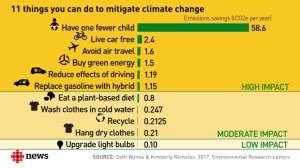


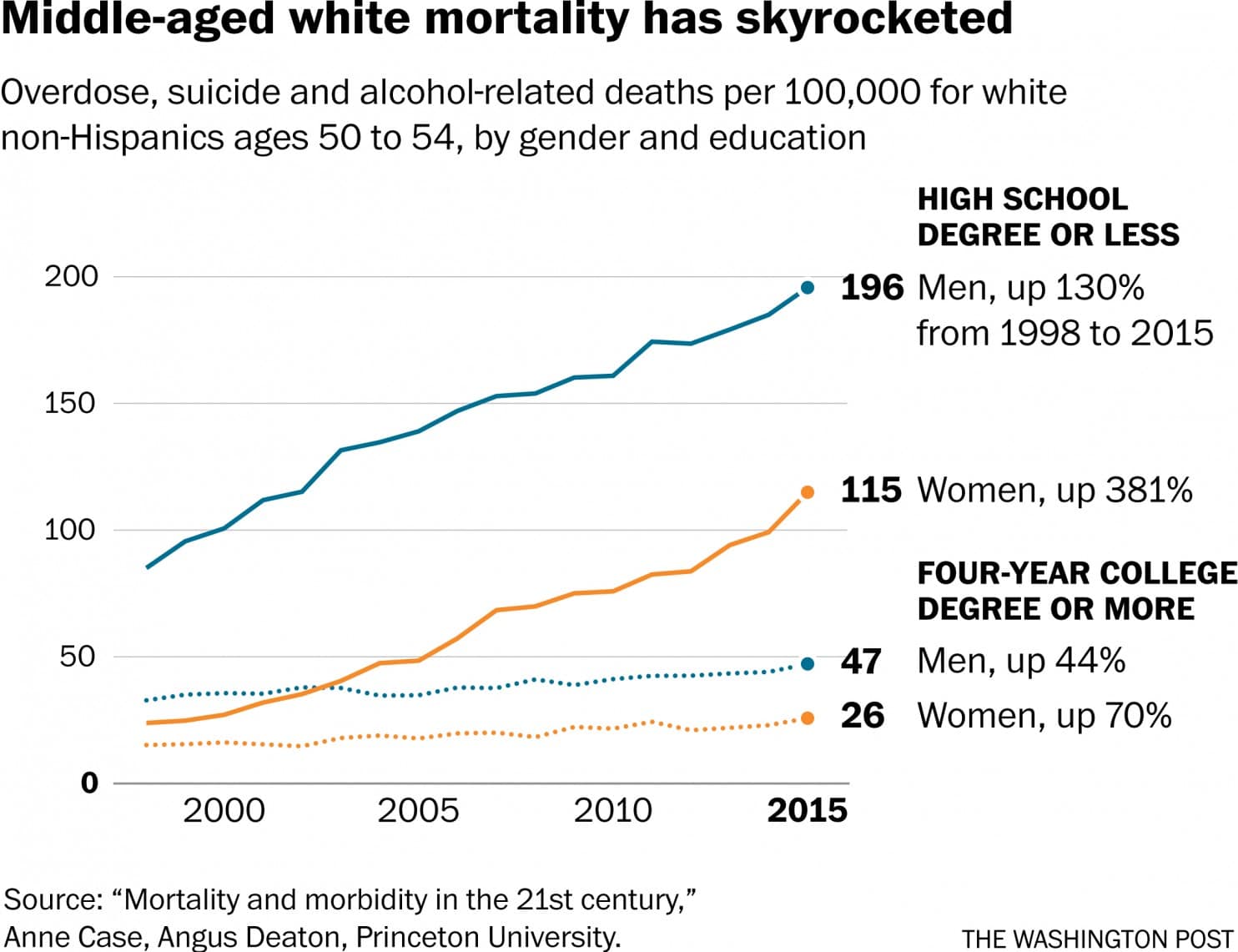


 The inverse of loving what is yours is that you do not love what is not yours.
 The out-of-Africa theory basically says that humans evolved in Africa, then spread in several pulses across the rest of the planet. The first hominin to leave Africa–as far as we know–was Erectus, followed by the Neanderthals/Denisovans, and finally Sapiens. Where exactly smaller, less well-known hominins like Homo Floresiensis fit into the picture we don’t know, yet.)


 (I have written


 evolutionistx